Low Poly IV
Acrylglas, Video
2016
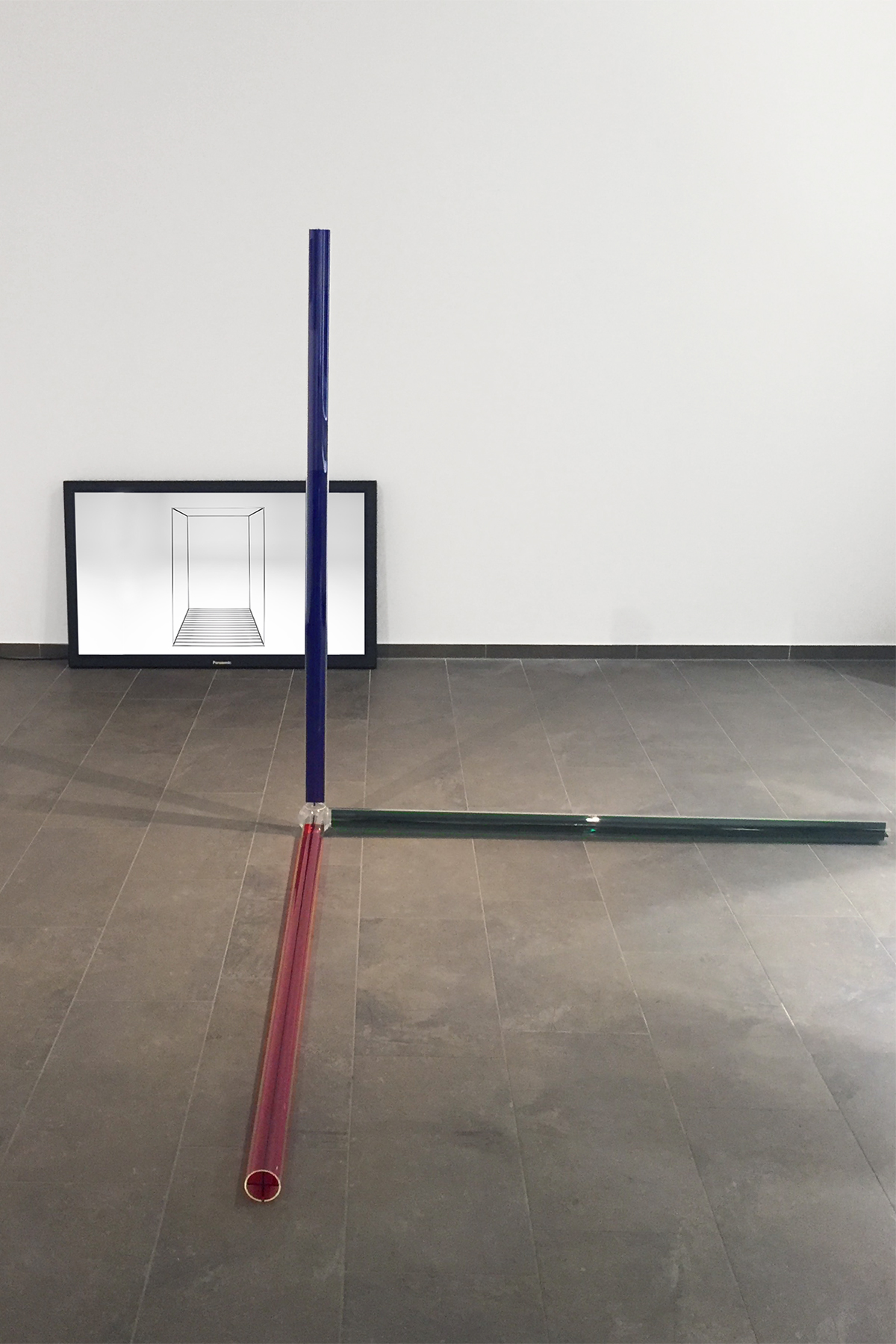
Das reale Objekt Low Poly IV aus Chromstahl schwebt analog einer Atmung schwere- und schattenlos über einer weissen SketchUp-Oberfläche auf einem Screen, sodass nur noch bildlicher Ersatz bestehen bleibt. Dieses Aus- und Einblenden und die gänzliche Verschiebung in die digitale Welt überfordert, der Verlust von Haptik und Oberfläche scheint aber bewusst gewählt, wirkt diese Überführung doch wie ein Hinweis auf die Entwicklung taktiler Interfaces. Das davorstehende reale Koordinatenkreuz aus RGBfarbenen Acrylglas-Rohren, konfrontiert den Rezipienten aufs Neue mit der Tatsache, die Grenze kaum noch klar zwischen virtueller und realer Welt ziehen zu können. Fiktion, Leben und Alltag vermischen sich und etablieren sich immer dichter im digitalen Kosmos.
The physical chromium steel object Low Poly IV floats like a breathe, weightless and shadowless, over a white sketchup interface on a screen so that only its visual substitute remains. This fading in and out and the total displacement in the digital world strains the viewer; the lack of tactility and interface, however, seems intentional, so that this transferal acts like a reference to the development of tactile interfaces. The physical coordinate plane of RGB-colored acrylic glass pipes before it confronts the recipient anew with the fact that the lines cannot be drawn clearly between the virtual and real worlds. Fiction, life and the ordinary are mixed and take root ever more densely in the digital cosmos.
Text Catrina Sonderegger
Pairs IV, DNA
Metall, Zement, Carrara-Marmor, Graphit
2015
Photo Martin Stollenwerk
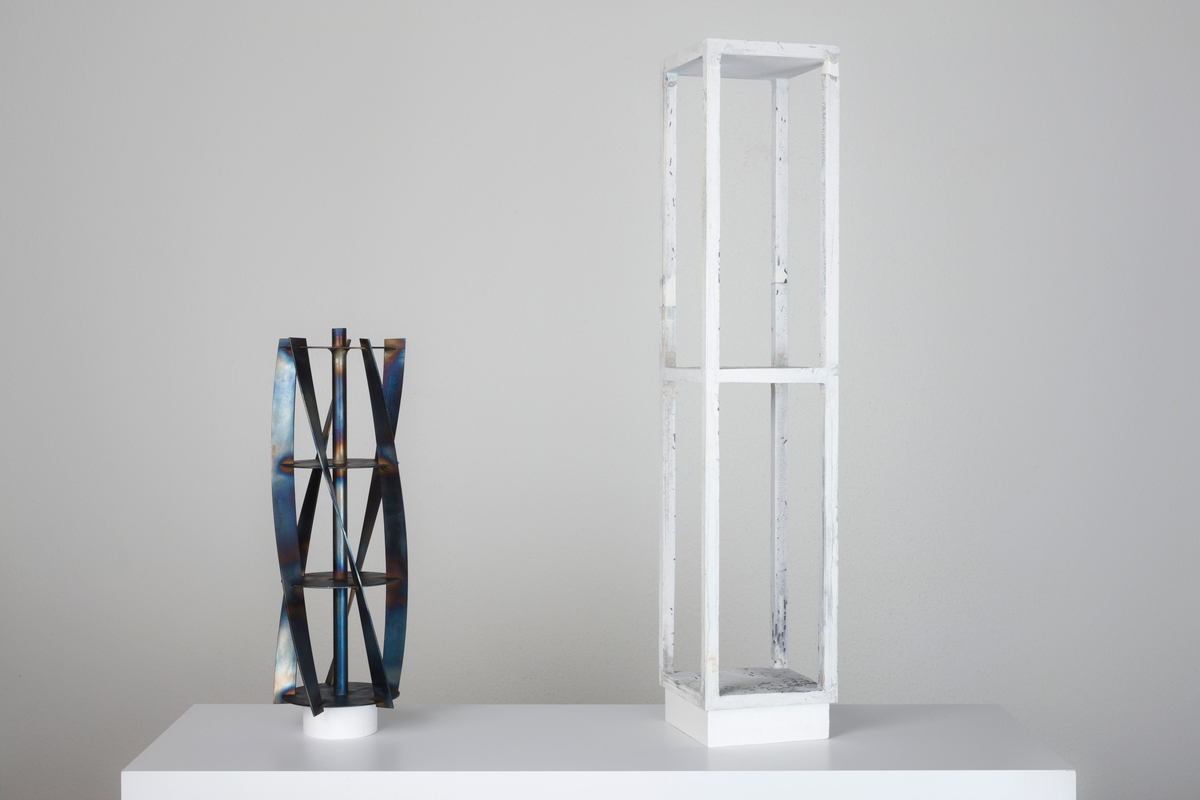
Zwei Desoxyribonukleinsäure-Stränge, einer davon gerade.
Two deoxyribonucleic acid-strand, one of them straight.
Low Poly III, Exchange
Chromstahl
2015
Photo Christian Beutler
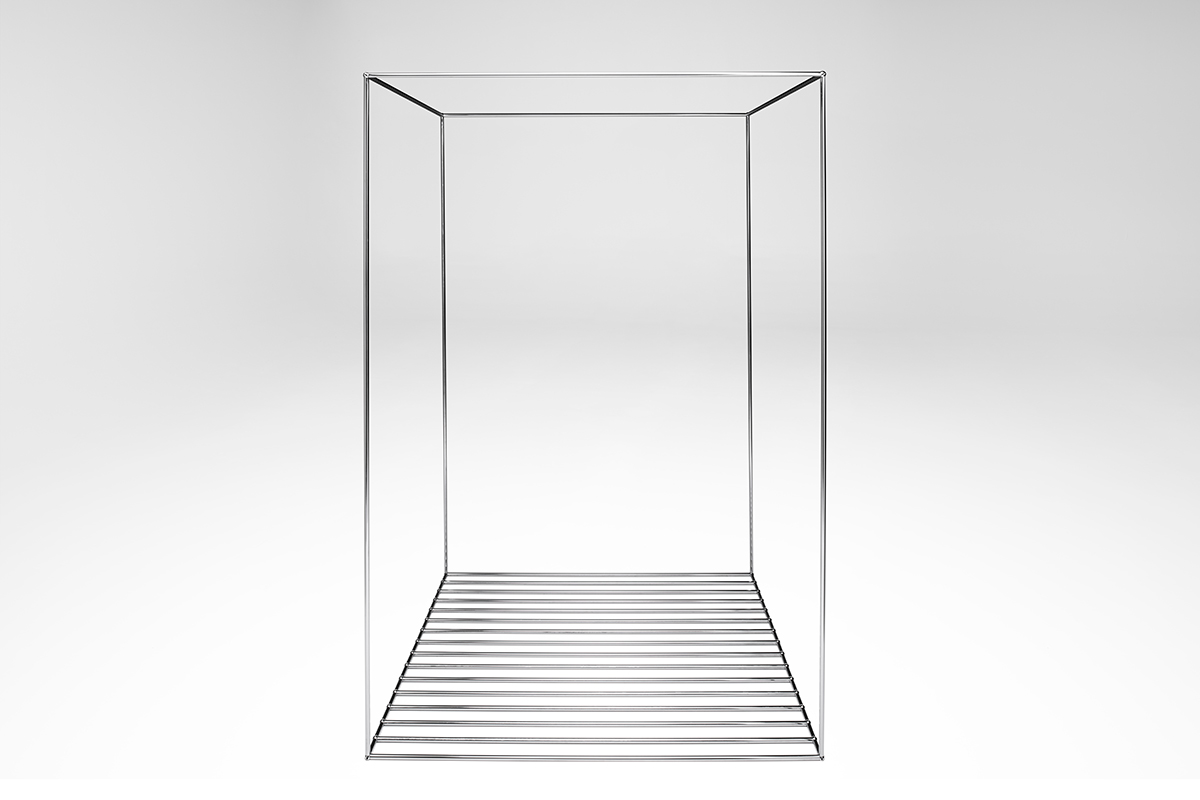
Ein reales Objekt aus glänzenden Chromstahlrohren wird zurück in die virtuelle Welt befördert. Das Objekt schwebt schattenlos und frei von Koordinatenkreuzen und Face-me Komponenten inmitten einer weissen SketchUp Oberfläche.
A real object of shiny chrome steel tubes is transported back into the virtual world. The object is floating shadowless and free of coordinate planes and Face-me components in midst of a white SketchUp surface.
RE:
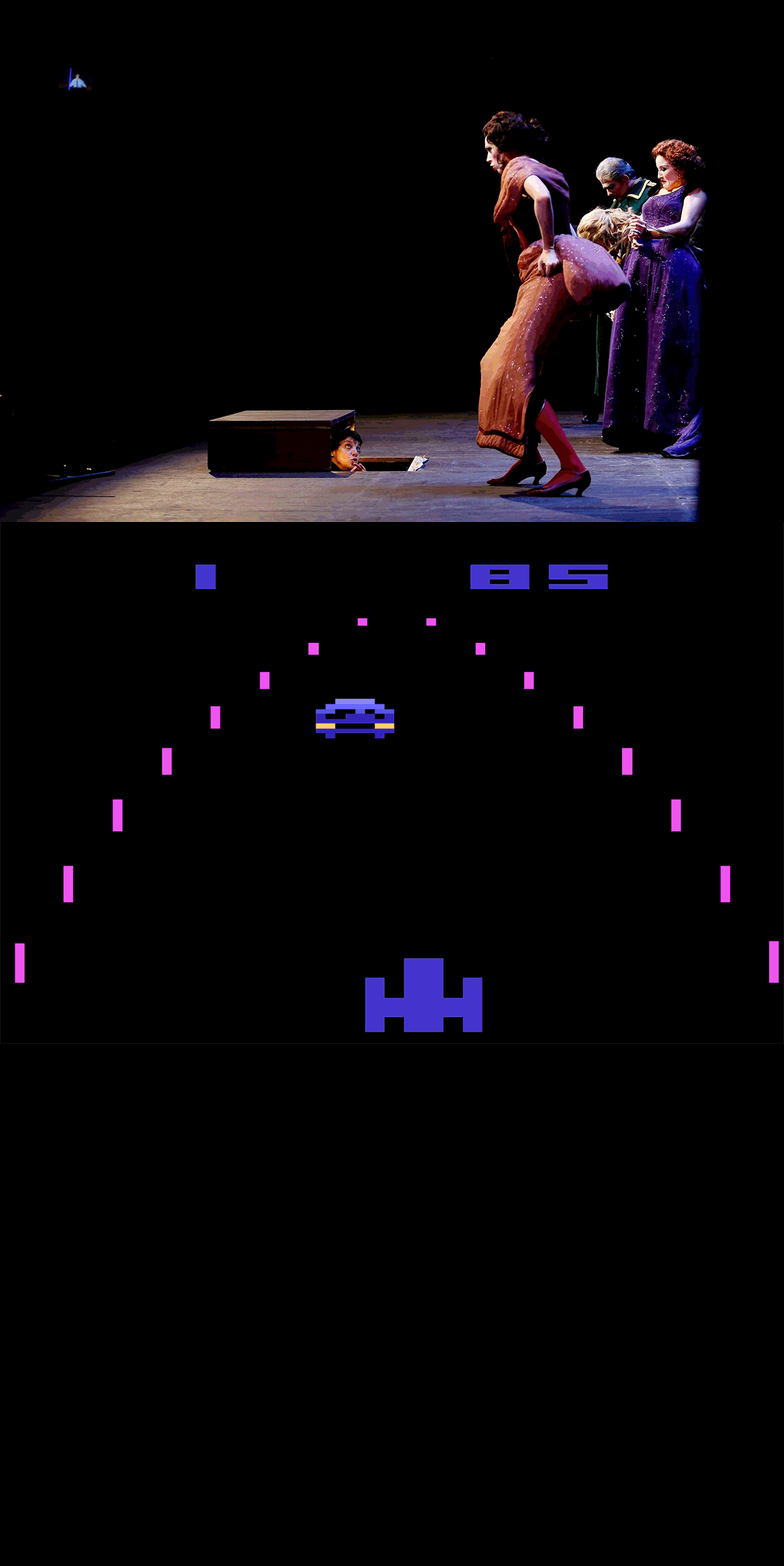
RE: William Leavitt, Photo Prompter Box, Screenshot Night Driver
2014 ongoing
Photo Kirsten Luce for The New York Times
„RE:“ ist eine Konversation in Bildern, angelehnt an die Technik der Filmmontage Match Cut*. Die Konversation beginnt zwischen Seiler Sommer und William Leavitt, es entwickelt sich ein Dialog assoziativer Bildreaktionen aufeinander. Daraus werden Parallelkonversationen abgeleitet, welche Seiler Sommer mit weiteren KünstlerInnen führt. Es entsteht ein stetig wachsendes System an linearen Konversationssträngen mit Bildern. Assoziationen zwischen KünstlerInnen, die kaum oder keinen Austausch hatten, werden dabei aufgespürt.
* Ein Match Cut ist eine Technik der Filmmontage, bei der in eine Szene hineingeschnitten wird und ein Element davon in einem anderen Bildmotiv fortgesetzt wird.
„RE:“ is a conversation in images inspired by the cutting technique of film editing match cut*. The conversation starts between Seiler Sommer and William Leavitt, and a dialogue of associative image reactions develops. From this dialogue, parallel conversations are derived, which Seiler Sommer lead with other artists. The result is a growing system of linear conversations with images. Associations between the artists, who had little or no exchange, will be tracked down.
*A match cut is a cut in film editing between either two different objects, two different spaces, or two different compositions in which objects in the two shots graphically match, often helping to establish a strong continuity of action and linking the two shots metaphorically. Source Wikipedia
Pen pals:
Denise Bertschi
Cris Faria
Simone Gilles
Tobias Gutmann
Dieter Hall
Gregory Hari
Trix & Robert Haussmann
huber.huber
William Leavitt
Esther Mathis
Michael Meier & Christoph Franz
Reto Müller
Jonas Schnyder
Veronika Spierenburg
Nina Weber
Pairs I, Venus
Holz, Graphit, Lack, Fischsilber, Acryl
2013
Photo Martin Stollenwerk
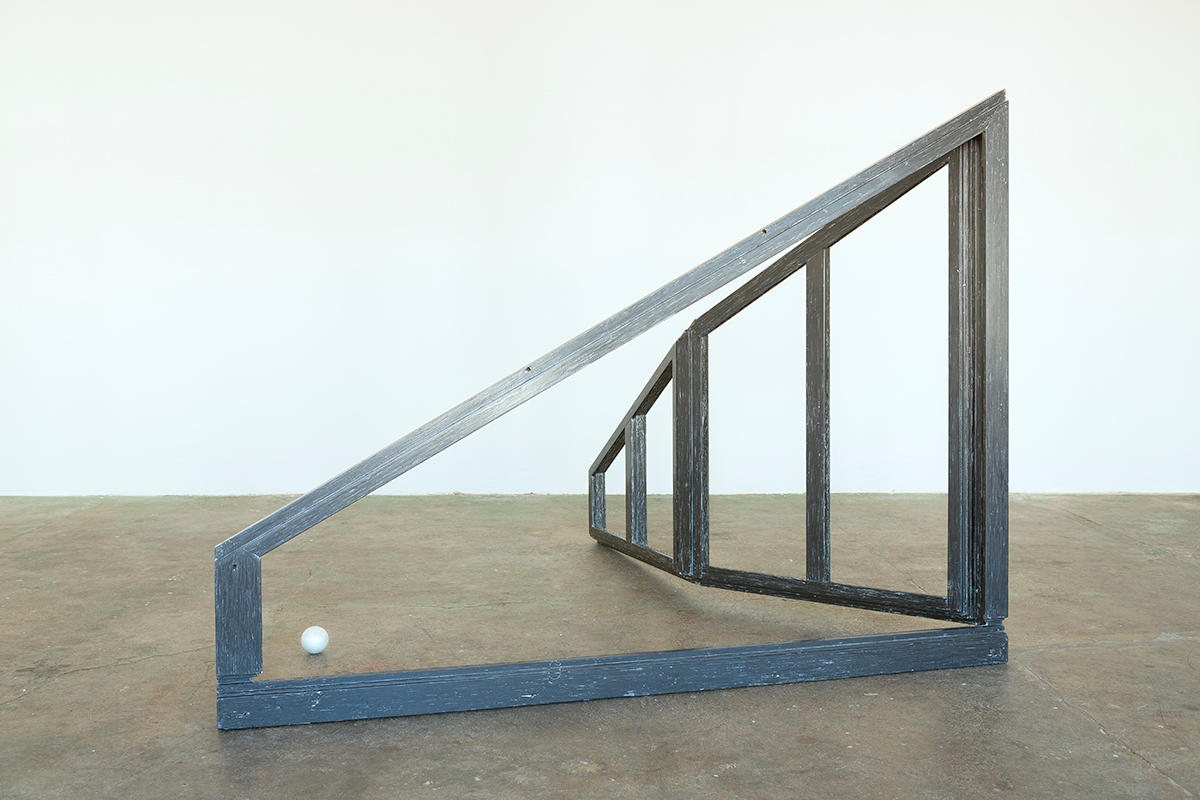
Ein liegendes Muschelgehäuse mit einer herausgerollten Perle.
A lying shell with a pearl rolled out.
Pairs II, Metal
Bismut, Blei
2014
Photo Martin Stollenwerk
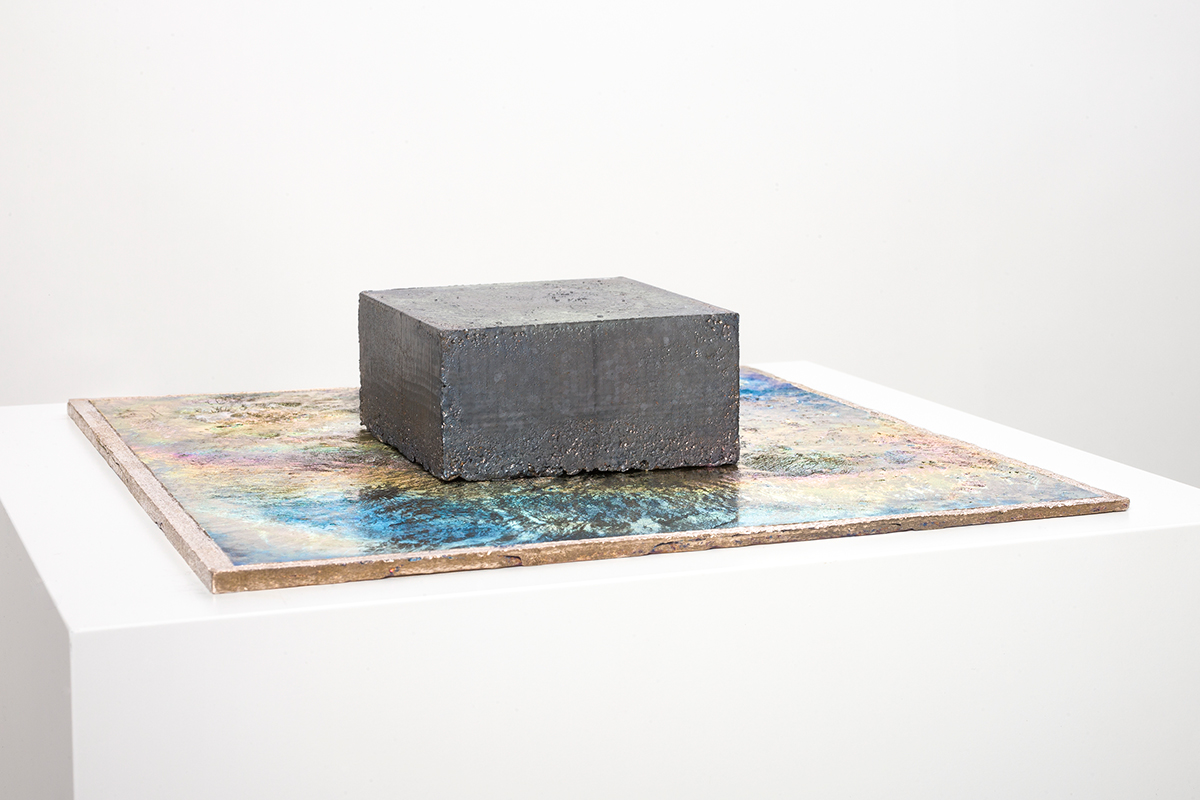
Ein metallener Klotz auf einer dünnen Metallplatte liegend.
A metallic block lying on a thin metal plate.
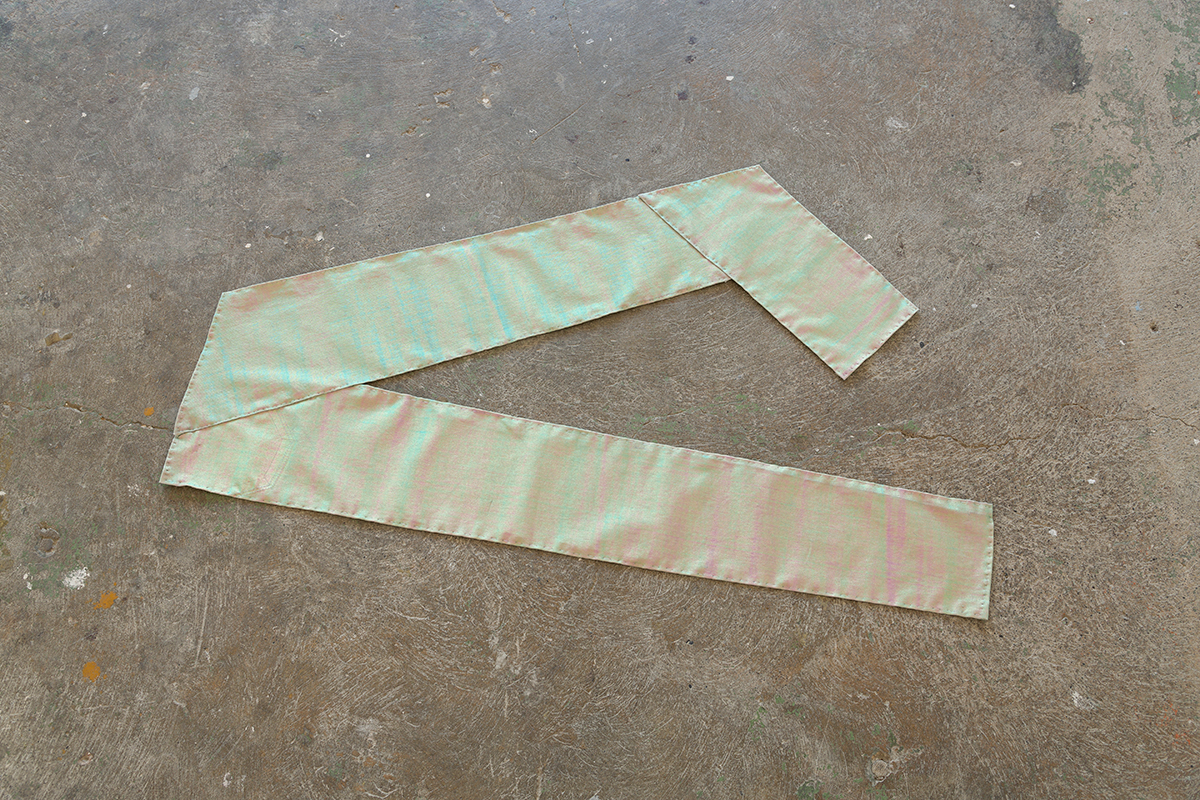
Pairs III, Legs
Textil, Perlmutt
2013
Photo Martin Stollenwerk
Ein Beinpaar eines liegenden Marlboro-Cowboys, ein Bein angewinkelt.
A pair of legs of a reclining Marlboro cowboy, one leg bent.
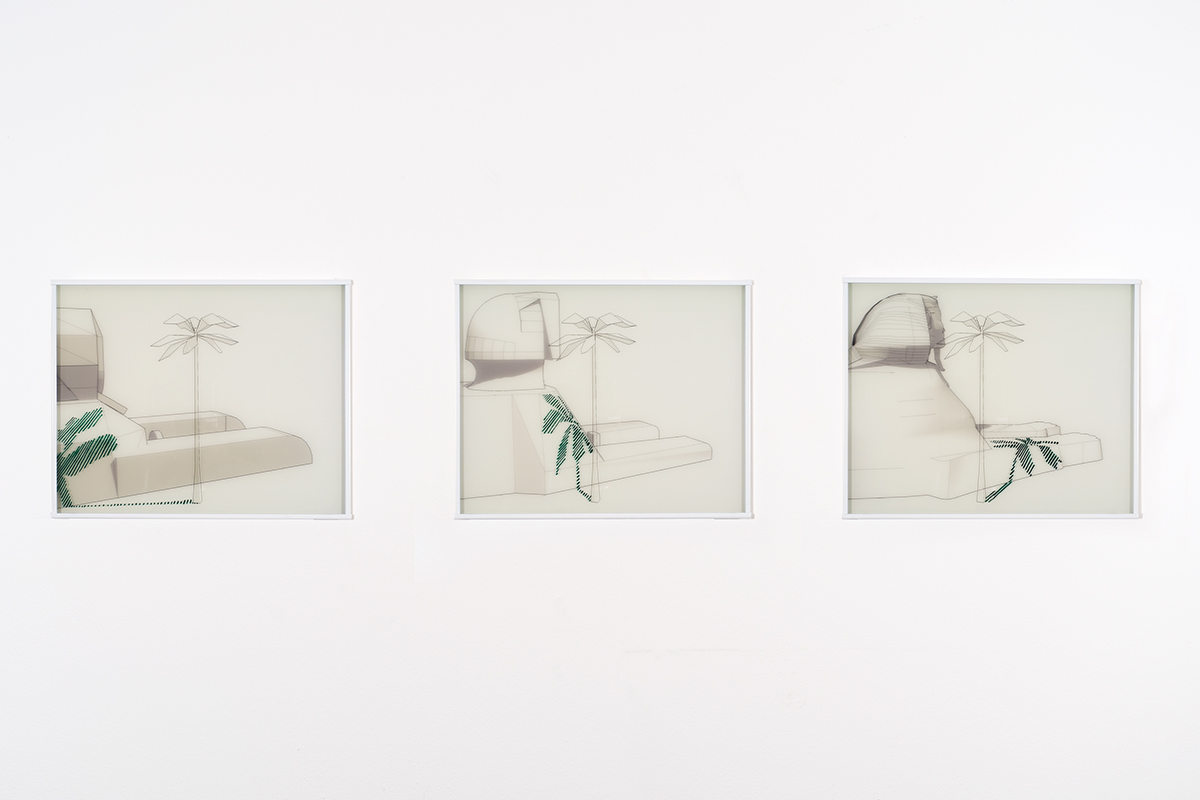
Low Poly I, Maggie
Inkjetprint, Glas, Marker
2013
Photo Christian Beutler
Eine Arbeit über einen Mythos aus der Blütezeit der ägyptischen Kultur. Die Sphinx hat an charakteristischen Einzelheiten verloren: Auffällig die fehlende Nase, weniger auffällig die verlorene Farbe. In der Bildserie wird die Sphinx weiter in drei individuelle Ansichten deformiert und vereinfacht. Trotz Demontage ist die Sphinx immer noch zu mächtig um sich im Schatten der Zeit hinzulegen.
A thesis on a myth from the heyday of Egyptian culture. The Sphinx has lost its characteristic details: Striking the missing nose, less noticeable the lost color. In the series, the Sphinx is further deformed and simplified into three individual views. Despite dismantling, the Sphinx is still too powerful to lie down in the shade of the time.
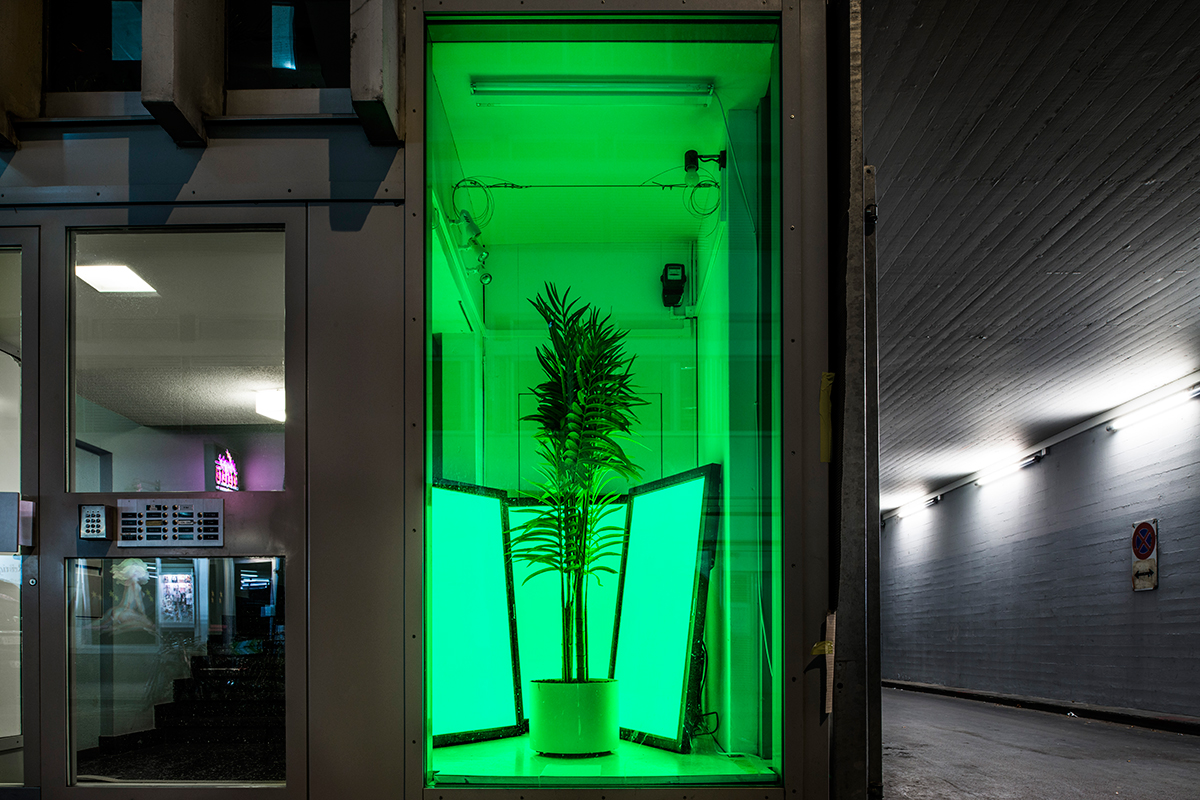
Low Poly II, Greatest Adventure
Areca, Blähton, Plasma Displays
2014
Photo Christian Beutler
Eine Arbeit über die schnelle Vereinfachung von Objekten. Ausser der Farbe hat der Schatten nichts mehr mit der Areca Palme zu tun. Zu einer Farbfläche reduziert, wechselt er ab und an schnell die Sättigung, ohne an Detail zu gewinnen. Das Kunststoff-Original wird in einfaches Hellgrün getaucht – eine Farbe, die es noch nie hatte.
A thesis on the fast simplification of objects. Apart from the color, the shadow doesn’t have anything to do with the Areca palm anymore. Reduced to a surface of colour, the shadow changes its saturation from time to time without winning any details. The original plastic is bathed in simple light green – a color it never had.
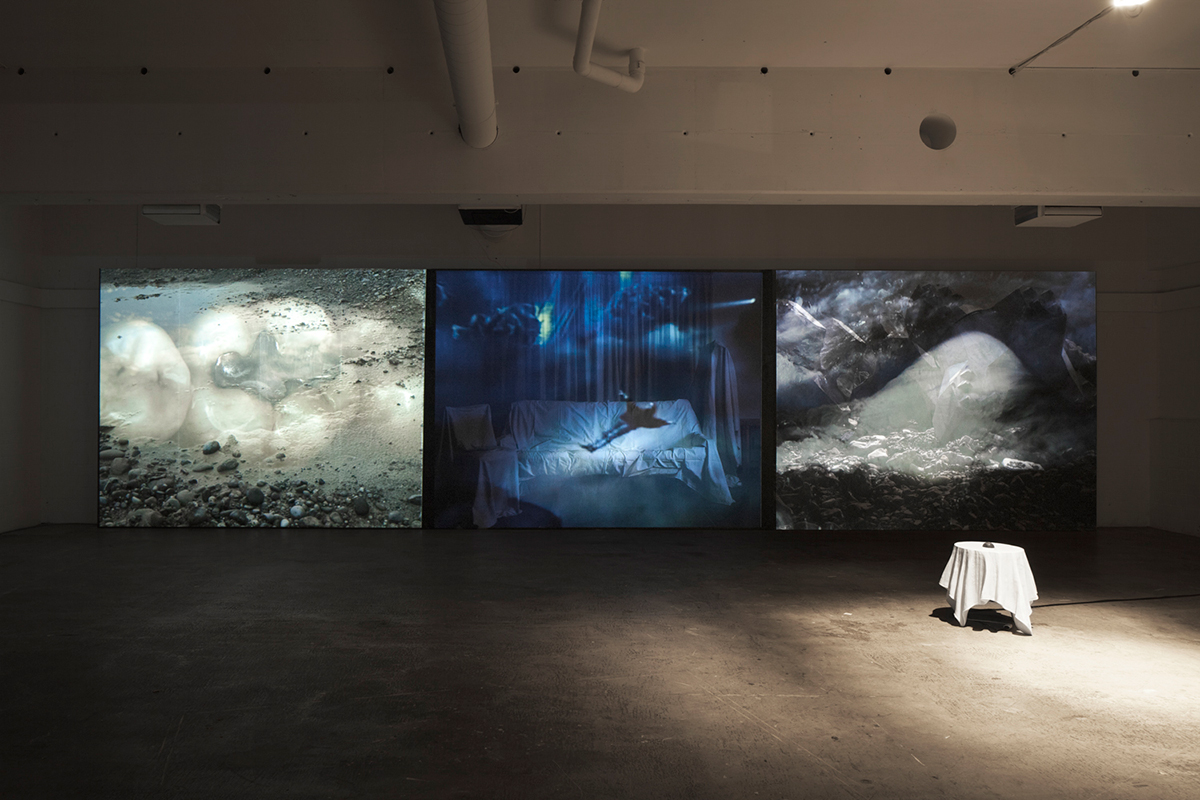
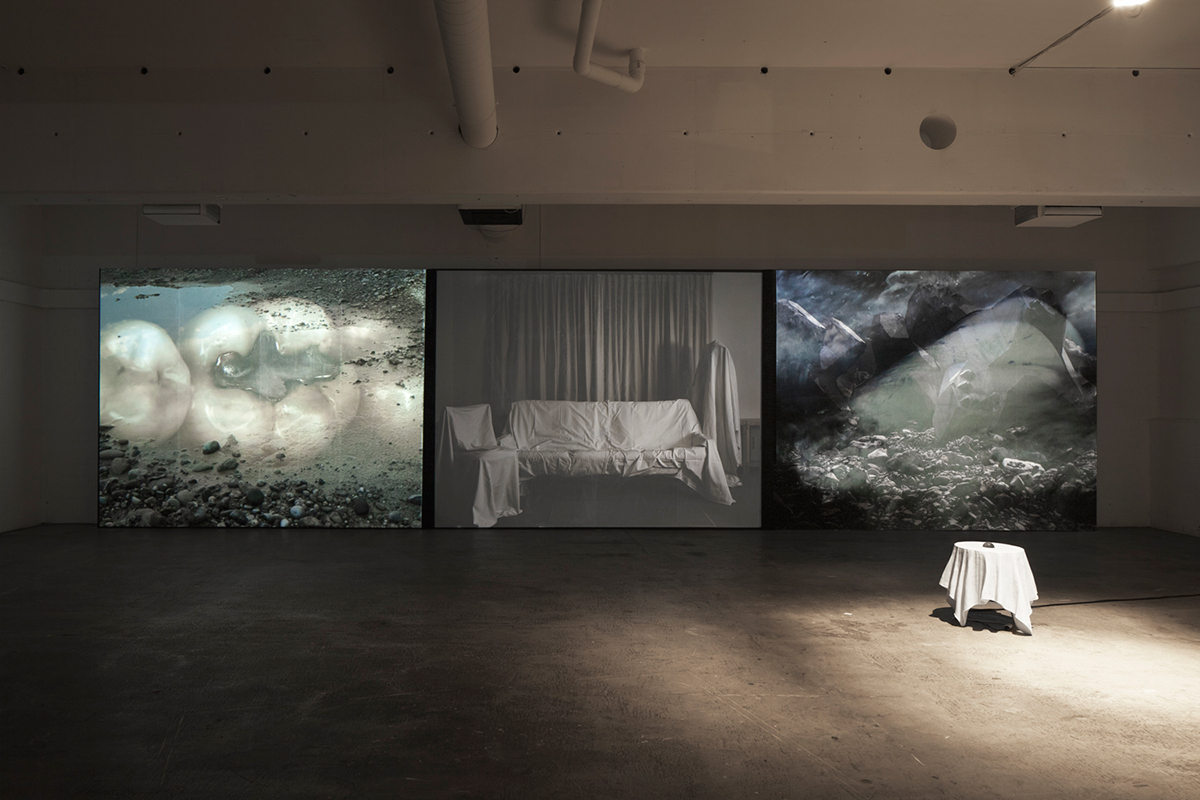
drei, zwei, eins, NULL – three, two, one, ZERO
Inkjetprint, Video, Glaskugel, Polyethylen
2012 Basel
Photo Max Reitmeier
Drei, zwei, eins, NULL. Hier ist der Weltuntergang. Ein schreckliches Ende oder die lang ersehnte Veränderung. Das Thema wird in einer Ernsthaftigkeit behandelt wie eine Kissenschlacht. Insgesamt scheint die Welt zu robust, kaum zu fassen, dass ihr wirklich etwas passiert. Doch in der Kiesgrube spiegelt sich das jüngste Gericht, David schwimmt dem Himmel entgegen und etwas Unbekanntes zieht zum Ende hin.
Three, two, one, ZERO. Here is the end of the world. A dreadful end or the awaited change. The topic is being treated with the seriousness of a pillow fight. On the whole the world seems robust, hard to believe, something is really going to happen to it. However, in the gravel pit the Last Judgement reflects, David swims towards the sky and something unknown is pulling towards the end.
In Collaboration with Christian Beutler and Mirjam Graf
Holly
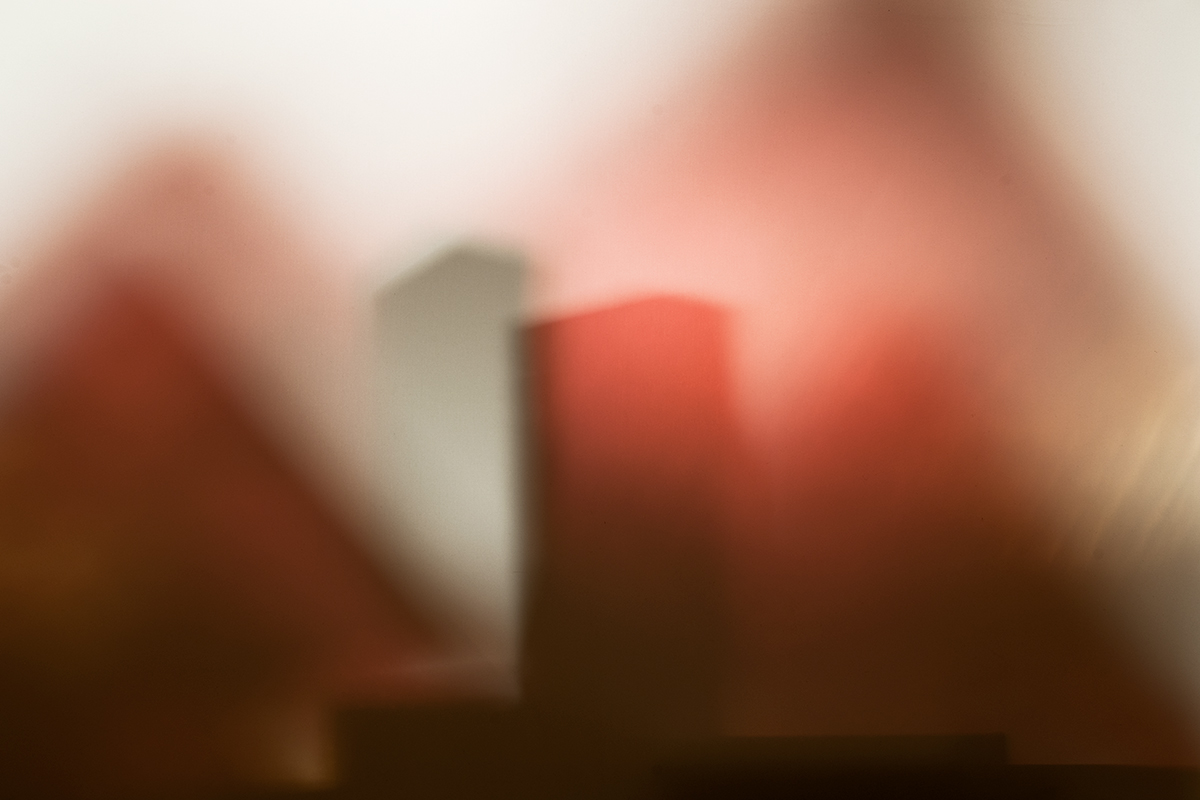
Architekturmodelle, bunte Glasscherben, hinter Leinwand
2012
Photo Christian Beutler
Architekturvisualisierungen versprechen Präzision mit detailgenauer Sicht auf kommende Bauten, die es so vielleicht nie geben wird. Mit ihren Arbeiten Holly 1 – 5 gehen Seiler Sommer den scheinbar entgegengesetzten Weg: Fünf Handlungsorte in Winterthur, wo demnächst markante Gebäude entstehen sollen, wurden ausgewählt und ausgelotet. Wie wirken sie auf die Betrachtenden? Welches ist ihre ureigene Anmutung, welche Farben und Formen prägen den Ort, die Nachbarschaft? Mithilfe von Architekturmodellen, vorgefundenen Strukturen und entsprechender Farbgebung wurden zukünftige Eindrücke sozusagen vorausgeahnt.
Architectural visualisation promise a detailed view on future constructions, which might never will be built like it. Seiler Sommer go on the opposite path with their works Holly 1 – 5: five sites in Winterthur, where striking buildings will be built soon, were selected and explored. What effect do they have on the viewer? What is their very own impression, what colours and forms left a mark on this site, the neighborhood? Using architectural models, existing structures and corresponding colours, future impressions were basically anticipated.
Text Liz Sutter
Jungbrunnen III – fountain of youth
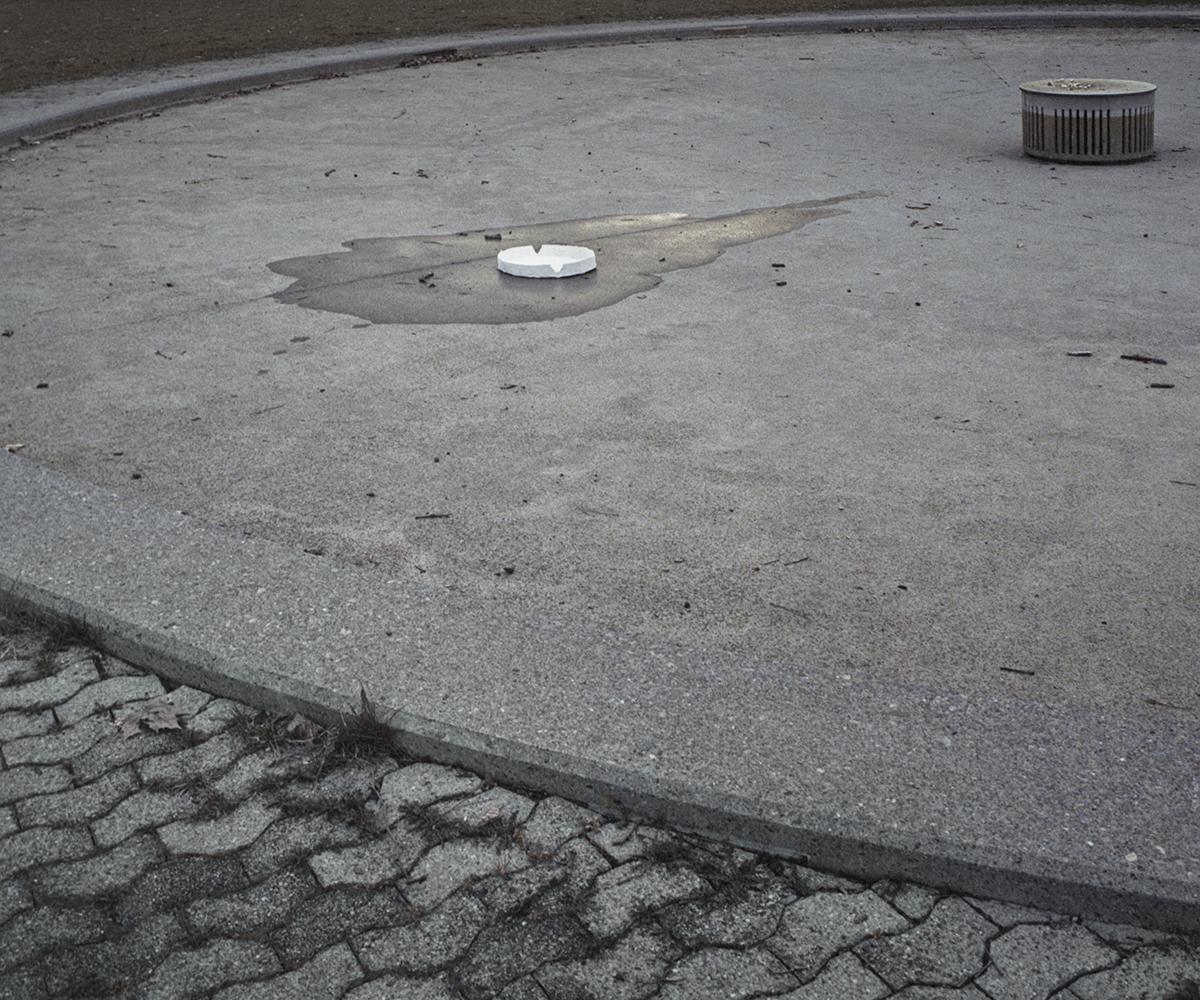
Gipsbandagen, Drahtgeflecht
2012 Zürich
Photo Esther Mathis
Die Seerosen schaukeln kaum. Das Wasser liegt ruhig. Am Bassinboden liegen hineingeworfene Münzen. Da, die Fontänen, die in Richtung der Wolken aufrauschen. Dann das Wasser, wie es nach kurzer Zeit wieder ins Bassin niederfällt. Ein Spritzer Pracht und Vergnügen. Die Arbeit befasst sich mit dem Jungbrunnen und dem Streben nach Makellosigkeit und Jugend. Der Jungbrunnen, dessen Wasser Gesundheit und ewiges Leben bringt. Der Jungbrunnen, der Kranke heilt und Alte zu jugendlicher Schönheit führt. Er ist der Beginn von einem Leben im Paradies.
The water lilies are barely swinging. The water is lying calm. Coins on the basin floor. There, the fountains whooshing up to the clouds. Then the water falling down into the basin again shortly after. A splash of glory and delight. The project is about the fountain of youth and the striving for spotlessness. The fountain of youth that brings health and eternal life with its water. The fountain of youth that heals the sick and leads elderly to juvenescent beauty.
Jungbrunnen II – fountain of youth
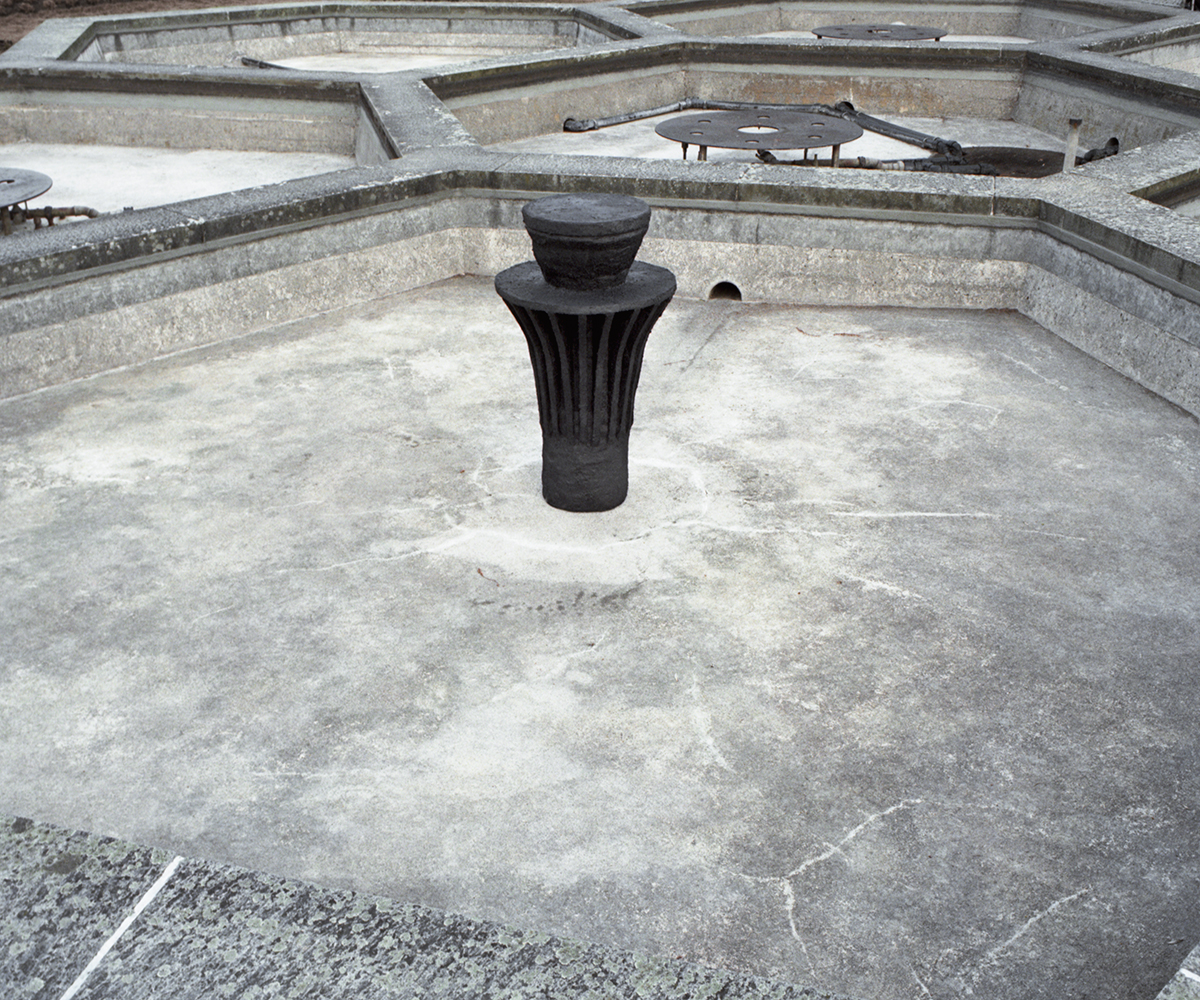
Bitumen, Polystyrol
2012 Zürich
Photo Esther Mathis
Die Seerosen schaukeln kaum. Das Wasser liegt ruhig. Am Bassinboden liegen hineingeworfene Münzen. Da, die Fontänen, die in Richtung der Wolken aufrauschen. Dann das Wasser, wie es nach kurzer Zeit wieder ins Bassin niederfällt. Ein Spritzer Pracht und Vergnügen. Die Arbeit befasst sich mit dem Jungbrunnen und dem Streben nach Makellosigkeit und Jugend. Der Jungbrunnen, dessen Wasser Gesundheit und ewiges Leben bringt. Der Jungbrunnen, der Kranke heilt und Alte zu jugendlicher Schönheit führt. Er ist der Beginn von einem Leben im Paradies.
The water lilies are barely swinging. The water is lying calm. Coins on the basin floor. There, the fountains whooshing up to the clouds. Then the water falling down into the basin again shortly after. A splash of glory and delight. The project is about the fountain of youth and the striving for spotlessness. The fountain of youth that brings health and eternal life with its water. The fountain of youth that heals the sick and leads elderly to juvenescent beauty.
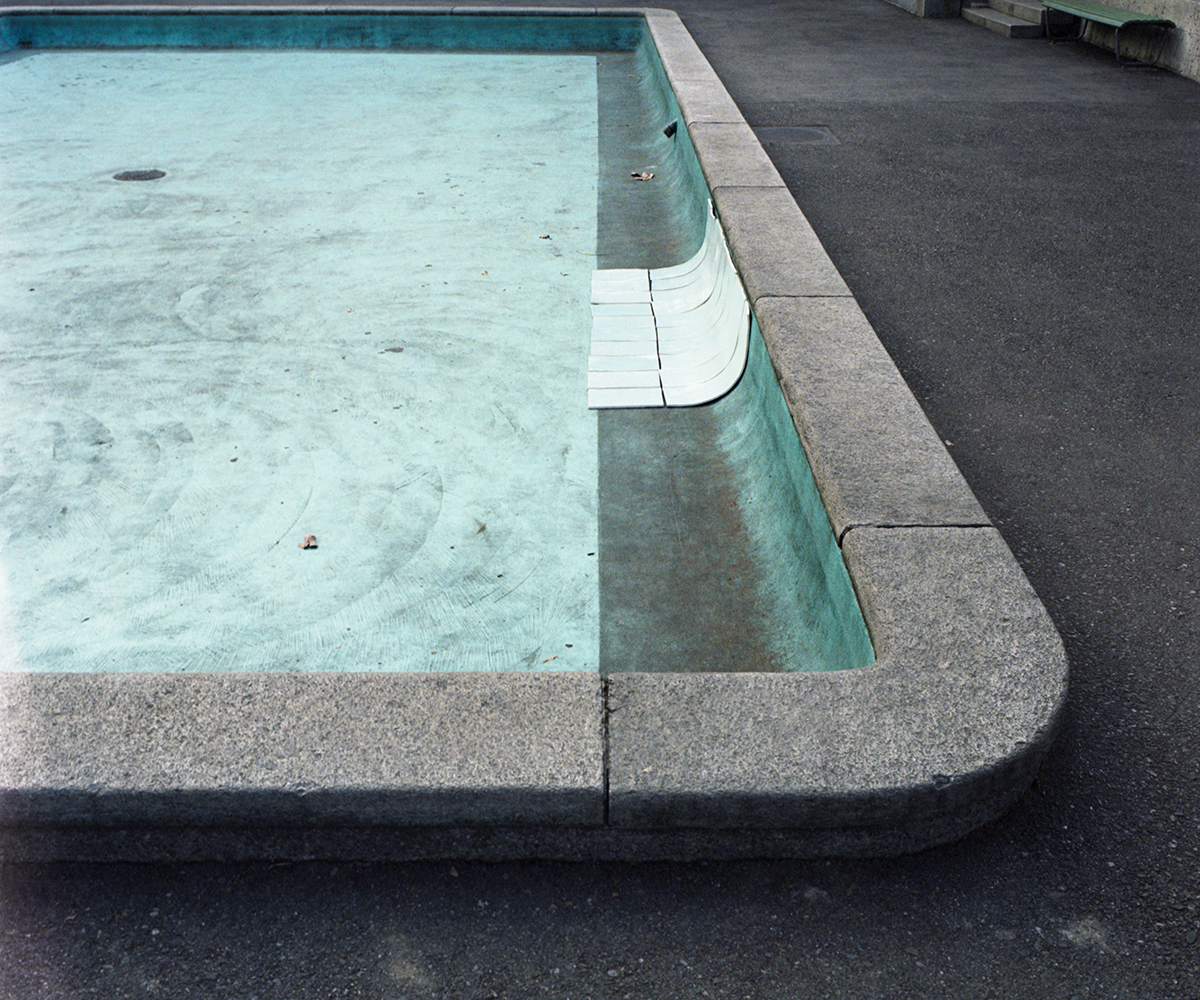
Jungbrunnen I – fountain of youth
Ton, Engobe
2012 Zürich
Photo Esther Mathis
Die Seerosen schaukeln kaum. Das Wasser liegt ruhig. Am Bassinboden liegen hineingeworfene Münzen. Da, die Fontänen, die in Richtung der Wolken aufrauschen. Dann das Wasser, wie es nach kurzer Zeit wieder ins Bassin niederfällt. Ein Spritzer Pracht und Vergnügen. Die Arbeit befasst sich mit dem Jungbrunnen und dem Streben nach Makellosigkeit und Jugend. Der Jungbrunnen, dessen Wasser Gesundheit und ewiges Leben bringt. Der Jungbrunnen, der Kranke heilt und Alte zu jugendlicher Schönheit führt. Er ist der Beginn von einem Leben im Paradies.
The water lilies are barely swinging. The water is lying calm. Coins on the basin floor. There, the fountains whooshing up to the clouds. Then the water falling down into the basin again shortly after. A splash of glory and delight. The project is about the fountain of youth and the striving for spotlessness. The fountain of youth that brings health and eternal life with its water. The fountain of youth that heals the sick and leads elderly to juvenescent beauty.
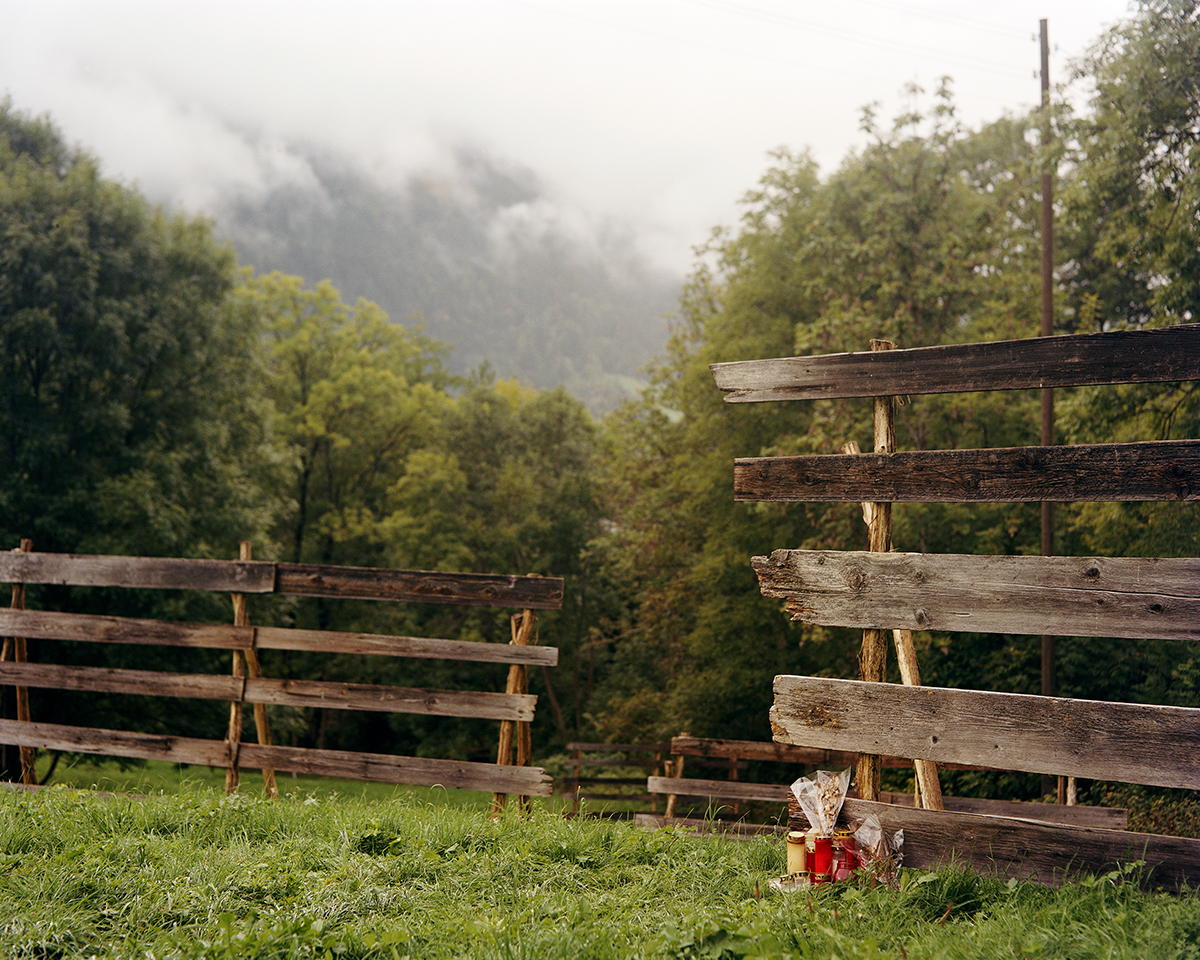
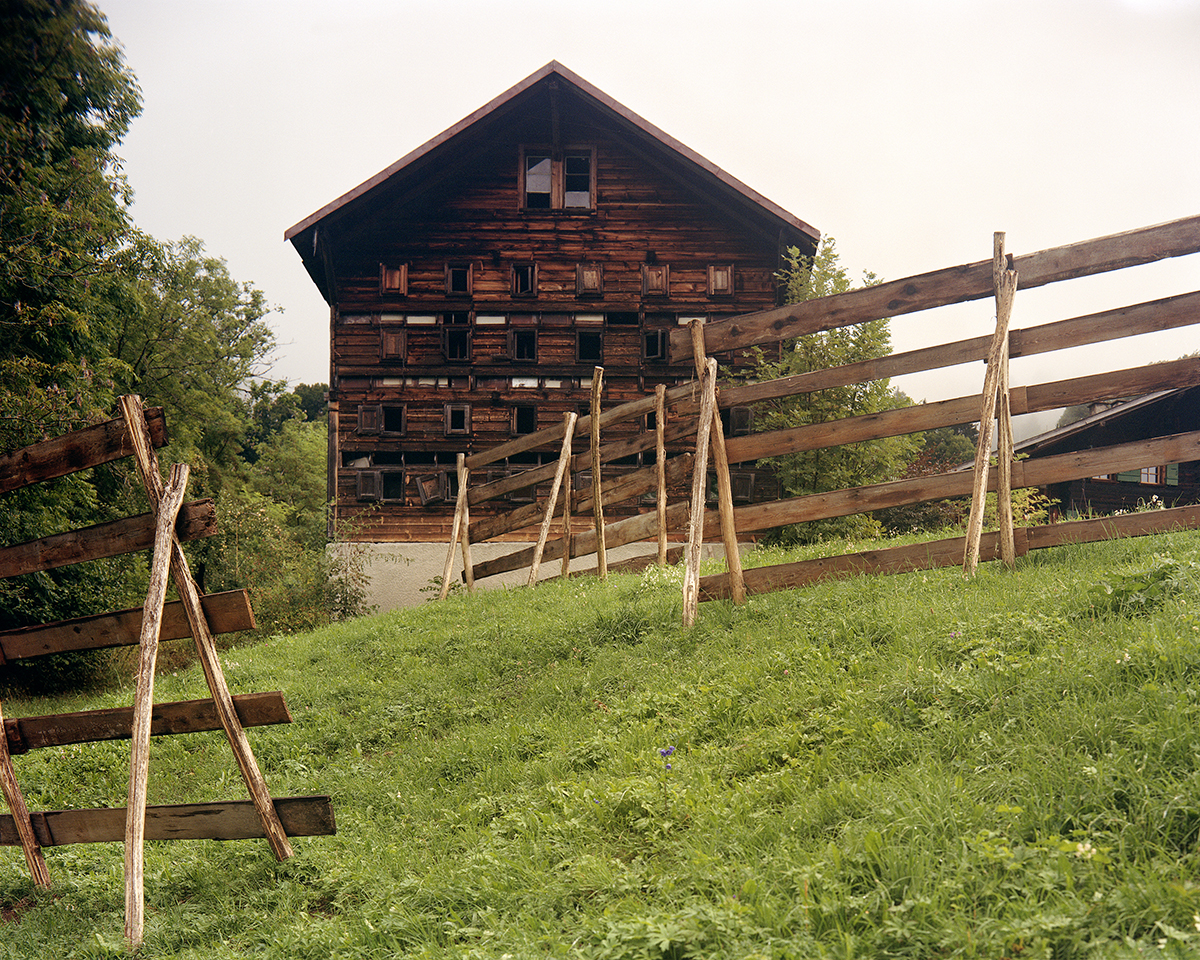
Zerfall IV – decay
Verwitterte Bretter, Pfähle, Blumen, Kerzen
2011 Rossinière
Photo Christian Breitler
Die Bienen sind ausgeflogen. Es scheint schon eine Weile her zu sein, seit aus gefüllten Waben Honig entnommen wurde. Zurzeit wird das leere Bienenhaus am Hang, neben dem Bach, mit Hausrat gefüllt. Das Holz ist stark verwittert und einige Läden hängen herunter oder fehlen. Das Bienenhaus zerfällt langsam. Es ist kein Auslöser oder eine offensichtliche Katastrophe zu sehen. Die Nachbarn, der ganze Ort ist in Gefahr. Die Bienen kommen nicht mehr zurück. Auf der kupierten Wiese zwischen dem Dorf und dem Bienenhaus stehen Lawinenverbauungen. Sie sollen vor der Katastrophe schützen. Sie stehen nur da. Sie werden zerfallen wie das Bienenhaus. Sie können nichts verhindern.
Die Arbeit befasst sich mit dem Zerfall von Objekten und Symbolen – von kulturellen Leistungen. Sie stellt die Frage nach der notwendigen Bewegung im beinahe zeitlosen Raum. Die Arbeit löst weder Freude über den Rückzug noch Trauer über den Zerfall aus. Sie wirft einen stoischen Blick auf das Ende des Dilemmas.
The bees have flown. It seems to be quite a wile ago that honey was taken from the filled combs. Currently, the empty beehive on a slope, near the stream, will be filled with household items. The wood is badly weathered and some of the shutters are hanging or missing. The beehouse decays slowly. There is no trigger or an obious disaster to see. The neighbours, the whole place is in danger. The bees won‘t come back. On the meadow between the village ant the beehive are avalanche barriers. They should prevent the disaster. They just stand there. They will decay like the beehouse. They couldn‘t prevent anything.
The work deals with the disintegration of objects and symbols – of cultural services. It raises the question of necessary movement in the almost timeless space. The work triggers neither joy about the retreat nor sadness about the decay. It takes a stoic view of the end of the dilemma.
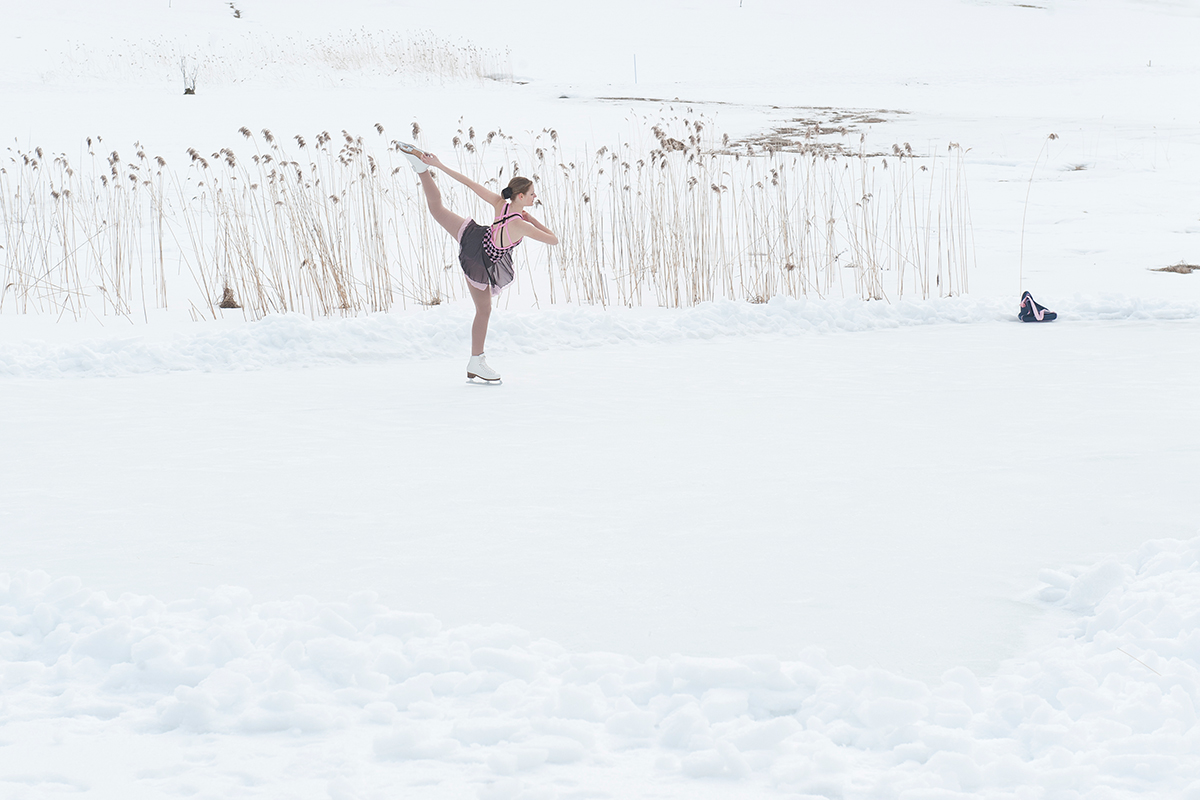
Zerfall III – decay
Asthmaspray, Tasche für Schlittschuhe
2011 Schwendisee
Photo Christian Beutler
Dünne Schilfhalme ragen aus der dicken Eisdecke. Für kurze Zeit liegt der Weiher gefroren da. Schon bald zerfällt die Eisdecke wieder. Keine Bewegung. Alles ist ruhig. Nur das Kratzen der Kufen ist zu hören. Gelassen gleitet eine Eiskunstläuferin über den Weiher. Ihre Sachen liegen im Schilf. Immer wieder hat die Eiskunstläuferin ihre Kür geübt. Der Fleiss hat zu Routine, Gelassenheit und Perfektion geführt. Aus ihren schnellen, angestrengten Atemgeräuschen werden immer Kürzere. Sie kiecht, sie pfeifft, sie ringt um Luft. Schnell zurück zu ihren Sachen. Ein kurzer befreiender Stoss aus dem Asthmaspray. Gelassen setzt die Eiskunstläuferin die perfekte Kür fort. Die Kür ist in zwei Teile zerfallen.
Die Arbeit befasst sich mit dem Zerfall von Objekten und Symbolen – von kulturellen Leistungen. Sie stellt die Frage nach der notwendigen Bewegung im beinahe zeitlosen Raum. Die Arbeit löst weder Freude über den Rückzug noch Trauer über den Zerfall aus. Sie wirft einen stoischen Blick auf das Ende des Dilemmas.
Thin reed stems protrude from the thick sheet of ice. For only a short time the pond is frozen. Real soon the ice cover is going to melt. No movement. The silence is absolute. Only the scratching of the blades is audible. An ice skater is sliding serenely on the ice. Nearby among the reeds are her things. The ice skater has practiced her free skating again and again. Her diligence has resulted in routine, serenity and perfection. Her fast and strained breath sounds are becoming shorter and shorter. She is wheezing, gasping, panting for air. Back to her things. A short relieving spray from her asthma inhaler. The ice skater resumes her perfect free skating. Her free skating is split into two parts.
The work deals with the disintegration of objects and symbols – of cultural services. It raises the question of necessary movement in the almost timeless space. The work triggers neither joy about the retreat nor sadness about the decay. It takes a stoic view of the end of the dilemma.
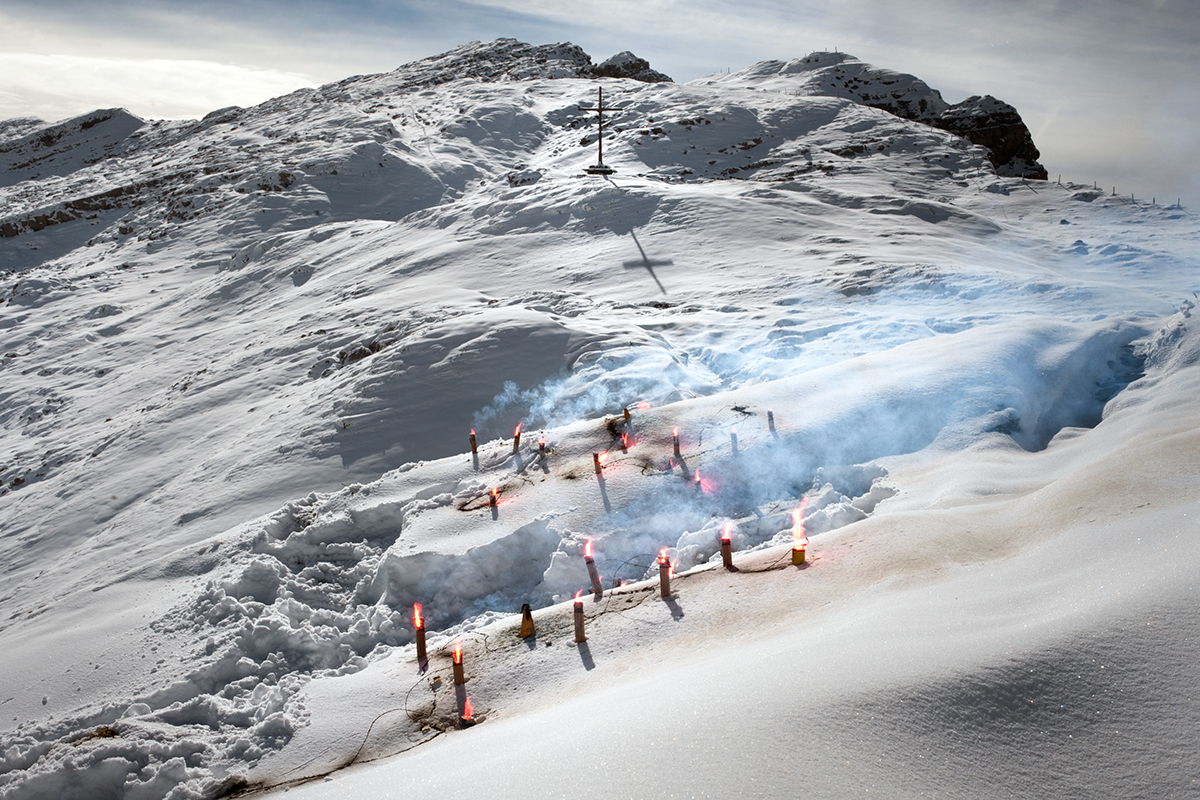
Zerfall II – decay
Signalfackeln, Bengaltöpfe, Vulkane, Anzündlitze
2010 Kinzig-Chulm
Photo Mirjam Graf
Auf einer Anhöhe in den Alpen brennen einige Signalfackeln. Der Schnee ist noch frisch. Das Kreuz, das eine Anhöhe im Hintergrund markiert, hingegen steht schon lange. Wieviel Kraft hat das Kreuz als religiöses Symbol oder Markierung des höchstens Punkts noch? Das Symbol ist schwach geworden, aber es ist nicht zu spät. Die brennenden Notsignale lassen eine Bedeutung des Symbols nochmals aufglühen. Für drei Minuten erhält es Kraft. Wenn das Zischen des Feuers aufhört, sind da nur noch versunkene Feuerwerkskörper im frischen Schnee. Aber es hat geklappt. Der Rauch zieht weg und nach einem kurzen intensiven Aufglühen des Symbols bleiben leere Hüllen zurück. So bleibt alles liegen und stehen wie es war.
Die Arbeit befasst sich mit dem Zerfall von Objekten und Symbolen – von kulturellen Leistungen. Sie stellt die Frage nach der notwendigen Bewegung im beinahe zeitlosen Raum. Die Arbeit löst weder Freude über den Rückzug noch Trauer über den Zerfall aus. Sie wirft einen stoischen Blick auf das Ende des Dilemmas.
Signal flares are burning on a hill in the Alps. The snow is still fresh. On the other hand, the cross that marks a hill in the background has existed for a very long time. How much power does the cross still have as religious symbol or marker of the highest point? The symbol has weakened but it is not yet too late. The burning emergency signals allow the importance of the symbol to glow again. For three minutes it gets powerful. When the splutter of the fire ceases, only dead fireworks remain sunken in fresh snow. It worked out. The smoke escapes and after the last intense glow of the symbol only empty shells remain. Everything is as it was before.
The work deals with the disintegration of objects and symbols – of cultural services. It raises the question of necessary movement in the almost timeless space. The work triggers neither joy about the retreat nor sadness about the decay. It takes a stoic view of the end of the dilemma.
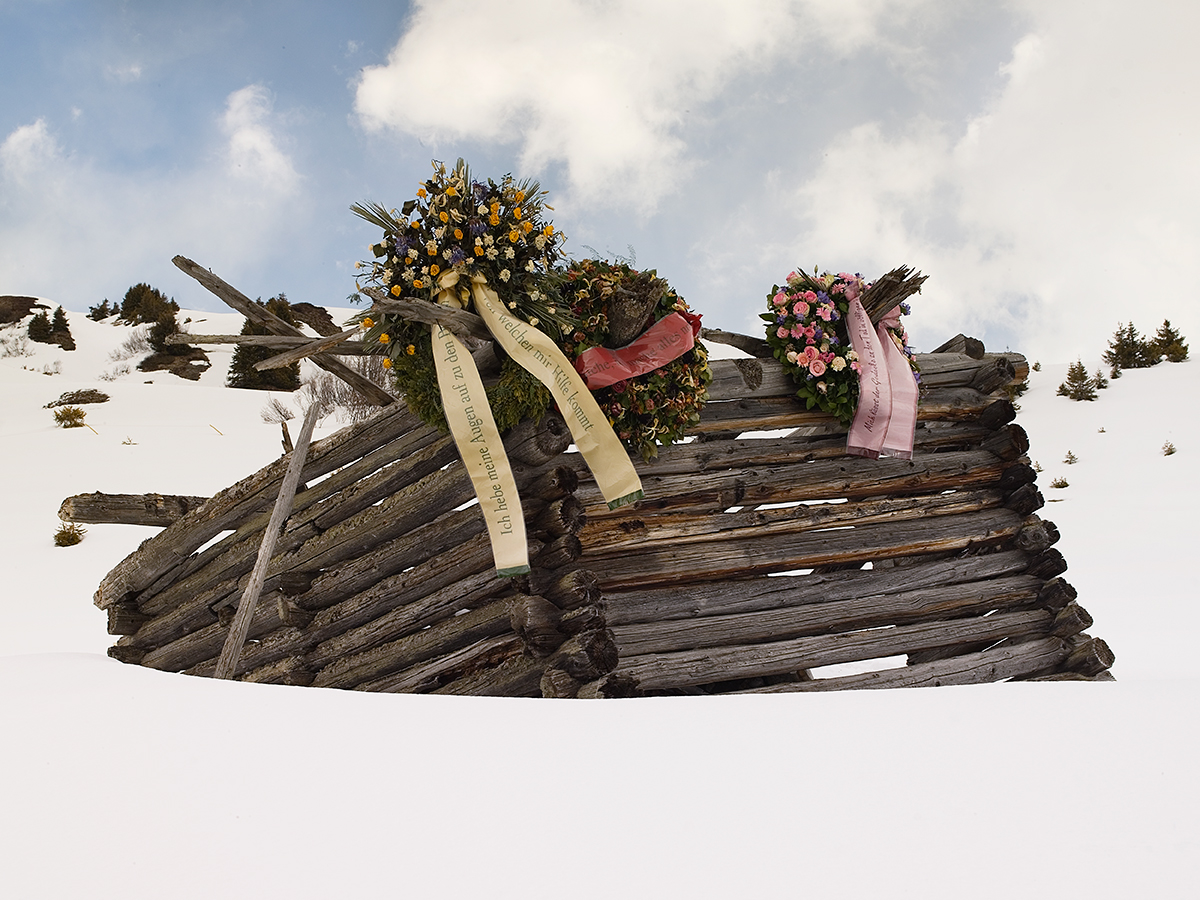
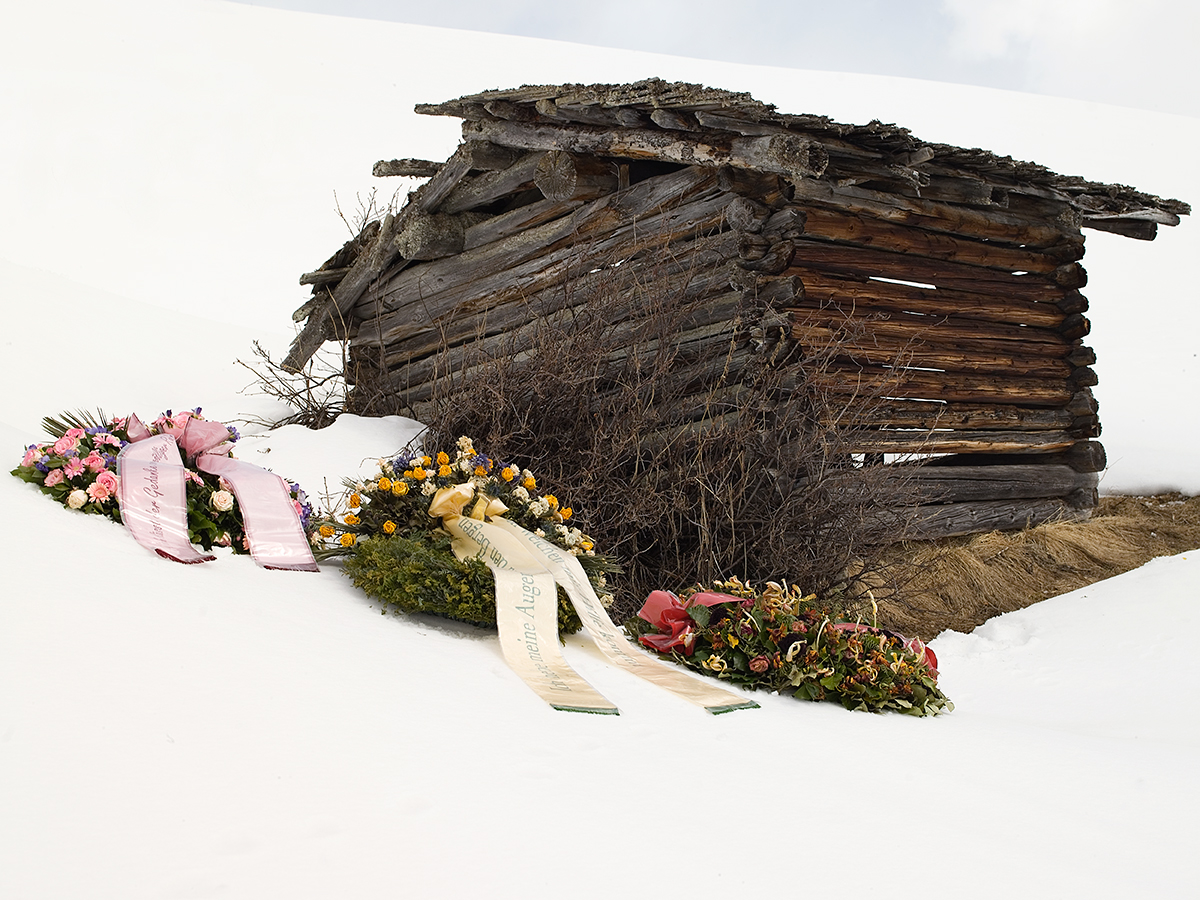
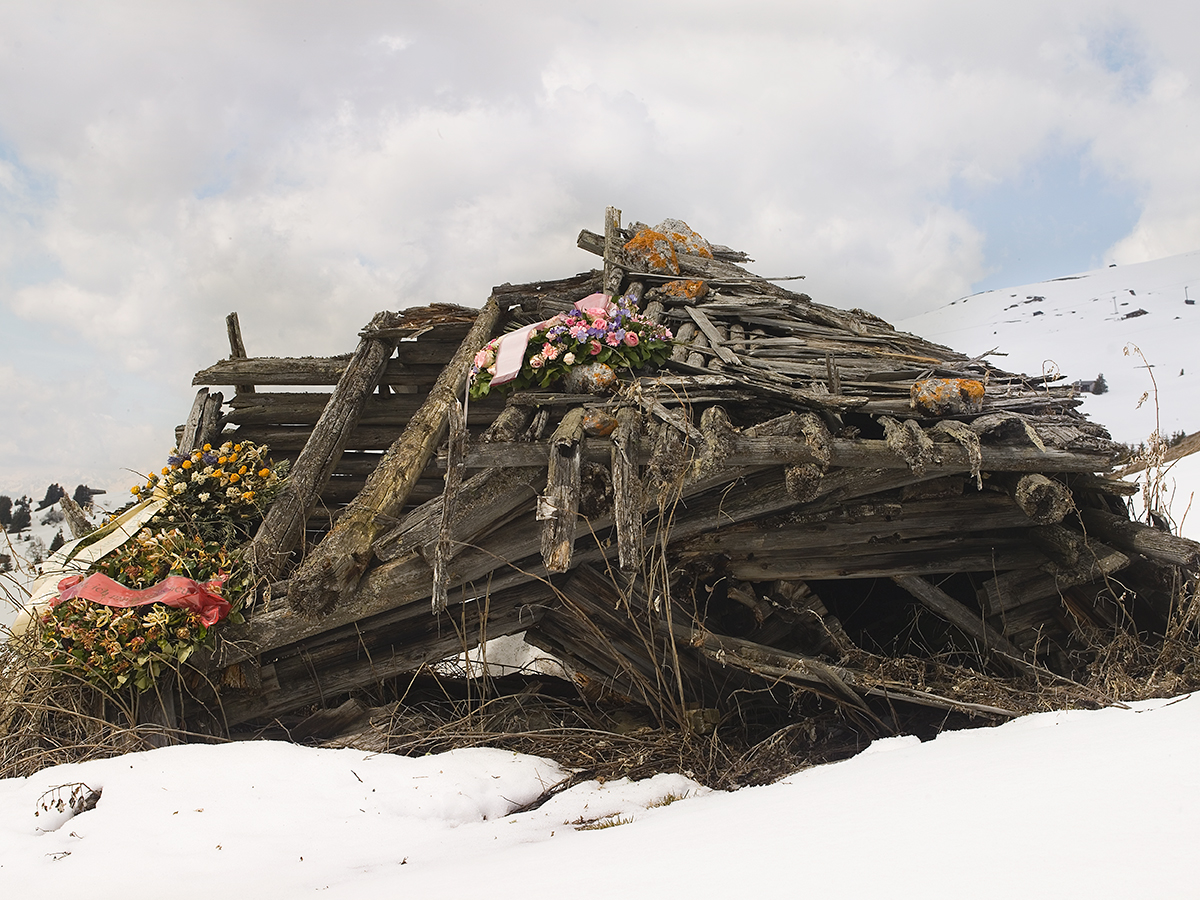
Zerfall I – decay
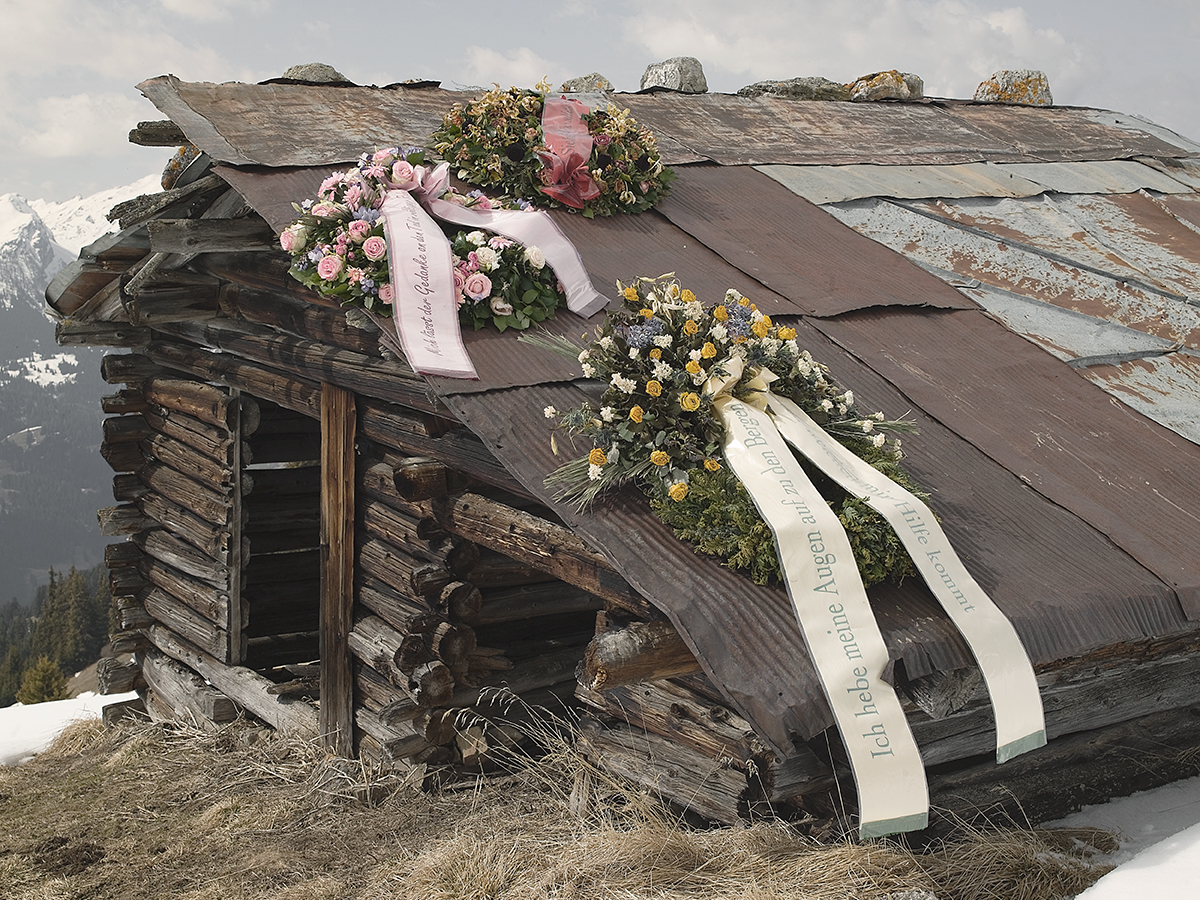
Blumenkränze, Schleifen, Trauerrosetten, Tragevorrichtungen
2010 Hochwang
Photo Roger Eberhard
Langsam geht der Winter. Schnell verschwindet der letzte Schneefleck und das Schmelzwasser sucht sich seinen Weg ins Tal. Das Wasser rinnt auch durch den Stall den Berg hinunter. Die aufgequollenen Balken machen den Stall schwer und träge. Irgendwann zerfällt und versinkt er völlig. Eigentlich sollte langsam wieder Leben einkehren auf der Alp. Aber der Stall bleibt verlassen. Nichts bewegt sich. Seit dem letzten Alpabzug hat sich nichts bewegt. Wann war der letzte Alpabzug, der letzte kunstvolle Blumenschmuck zu Tal getragen worden? Wann hat sich der Alpwirt letzmals über seine Rückkehr ins Tal gefreut? Die Ställe und der Blumenschmuck zeigen die Zwangslage zwischen Aufgeben und endgültigem Weggehen oder Zurückkehren und Wiederaufbauen.
Die Arbeit befasst sich mit dem Zerfall von Objekten und Symbolen – von kulturellen Leistungen. Sie stellt die Frage nach der notwendigen Bewegung im beinahe zeitlosen Raum. Die Arbeit löst weder Freude über den Rückzug noch Trauer über den Zerfall aus. Sie wirft einen stoischen Blick auf das Ende des Dilemmas.
Slowly goes the winter. Quickly disappears the last snow patch and the melt water finds its way down into the valley. The water flows down the hill through the barn as well. The swollen bars make the stable look heavy and slow. Eventually the stable falls apart and sinks completely. Life on the mountain should now slowly reintroduce, but stays abandoned. Nothing moves. Since the last Désalpe nothing has changed. When was the last Désalpe? When were the last artfully flowers carried to the valley? When was the last time, the alp farmer looked forward to his return to the valley? The stables and the flowers show the dilemma between giving up and leaving for good, and returning and rebuilding.
The work deals with the disintegration of objects and symbols – of cultural services. It raises the question of necessary movement in the almost timeless space. The work triggers neither joy about the retreat nor sadness about the decay. It takes a stoic view of the end of the dilemma.
Sisyphos III
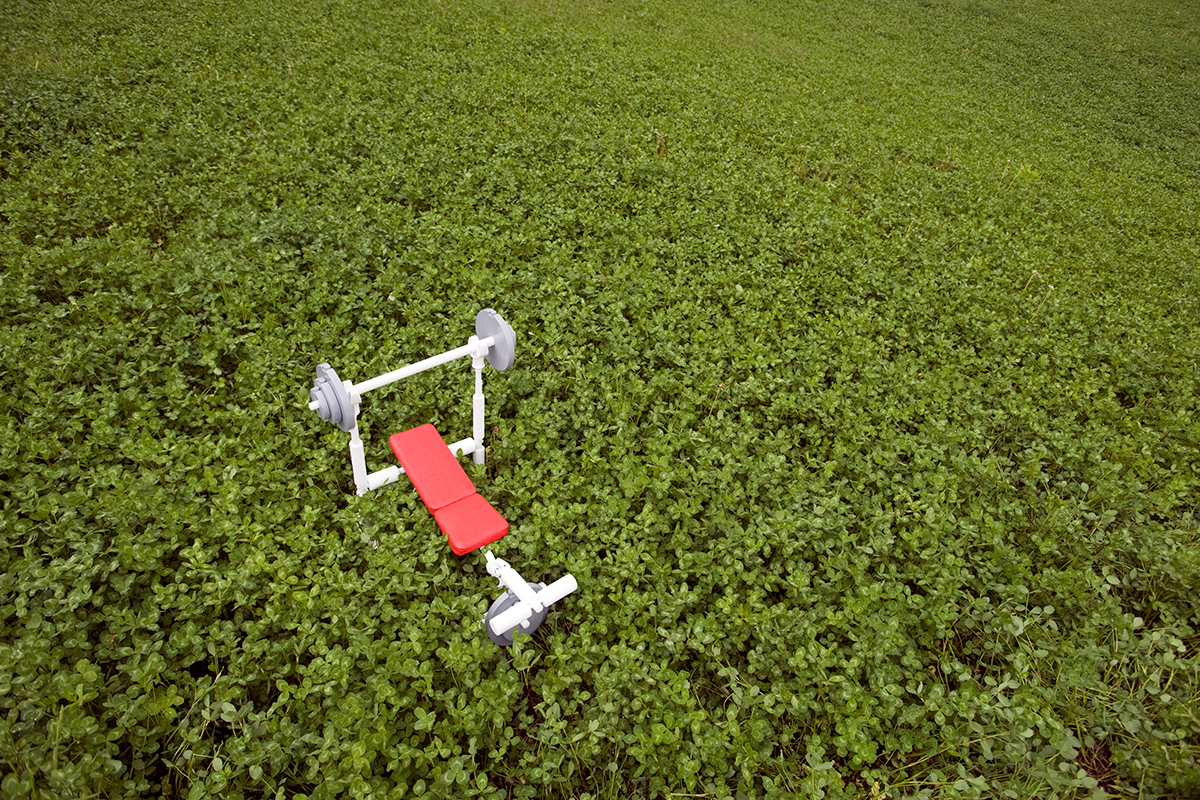
Hantelbank, Kleefeld
2010 Winterthur
Photo Mirjam Graf
Eine Arbeit mit einer Hantelbank über den überglücklichen Menschen. ‘Sisyphos aber stiess ihn immer wieder zurück, sich anspannend, und es rann der Schweiss ihm von den Gliedern, und der Staub erhob sich über sein Haupt hinaus.’ (Homer, Odyssee 11. Gesang)
Die Arbeit ‚Sisyphos‘ befasst sich mit dem Moment indem das Glücksgefühl scheinbar abrupt verschwindet, dem Scheitern nach beharrlicher Arbeit. Immer kurz bevor Sisyphos den Gipfel erreichte, entglitt ihm der Felsblock, und er musste wieder von vorne anfangen. Kann Sisyphos wirklich glücklich sein wie es Albert Camus in seinem Essay beschreibt? Kann das Wälzen eines Blocks einen Menschen so sehr beschäftigen, dass er seine Existenzerfüllung darin findet? Die enorme Anstrengung und Konzentration verhindert eine Reflexion der Tätigkeit. Sisyphos stellte sich die Frage nach dem Sinn des Lebens nie. Er hatte immer eine Aufgabe. Das alleinige Streben nach dem Ziel erfüllte ihn – selbst wenn dieses unerreichbar blieb. Ja, Sisyphos war ohne Zweifel ein glücklicher Mensch.
A work with a weight bench about the jubilant man. ‚Then he would begin trying to push it up hill again, and the sweat ran off him and the steam rose after him.‘ (Homer, Odyssey, Book XI)
‚Sisyphos‘ is about the moment in which happiness seems to disappear abruptly, the moment of failure after a persistent task. Whenever Sisyphos was on the verge of reaching the top of the hill the block of stone slipped from his hands. He had to start from the beginning. Is it really possible that Sisyphos is happy as Albert Camus describes him in his essay? The rolling of a boulder can absorb a man to such an extent that he can pursuit satisfaction. The enormous effort and concentration prevents him from reflec- ting on his task. Sisyphos never questioned the meaning of life. He always had a task. The ambition to attain the goal satisfied him even if it was out of reach. Yes, Sisyphos was a happy man indeed.
Sisyphos II
Roter Plastikbob, Steinblock
2010 Zürich, Stadel
Eine Arbeit mit einem Steinblock und einem roten Bob über das kraftlose Nachschauen. ‘Ja, und mit Händen und Füssen stemmend, stieß Sisyphos den Block hinauf auf einen Hügel. Doch wenn er ihn über die Kuppe werfen wollte, so drehte ihn das Übergewicht zurück: von neuem rollte dann der Block, der schamlose, ins Feld hinunter.’ (Homer, Odyssee 11. Gesang)
Die dreiteilige Arbeit ‚Sisyphos‘ befasst sich mit dem Moment indem das Glücksgefühl scheinbar abrupt verschwindet, dem Scheitern nach beharrlicher Arbeit. Immer kurz bevor Sisyphos den Gipfel erreichte, entglitt ihm der Felsblock, und er musste wieder von vorne anfangen. Kann Sisyphos wirklich glücklich sein wie es Albert Camus in seinem Essay beschreibt? Kann das Wälzen eines Blocks einen Menschen so sehr beschäftigen, dass er seine Existenzerfüllung darin findet? Die enorme Anstrengung und Konzentration verhindert eine Reflexion der Tätigkeit. Sisyphos stellte sich die Frage nach dem Sinn des Lebens nie. Er hatte immer eine Aufgabe. Das alleinige Streben nach dem Ziel erfüllte ihn – selbst wenn dieses unerreichbar blieb. Ja, Sisyphos war ohne Zweifel ein glücklicher Mensch.
A work with a block of stone and a red bobsled about staying powerlessly behind. ‚With hands and feet he tried to roll it up to the top of the hill, but always, just before he could roll it over on to the other side, its weight would be too much for him, and the pitiless stone would come thundering down again on to the plain.‘ (Homer, Odyssey, Book XI)
‚Sisyphos‘, a work in three parts, is about the moment in which happiness seems to disappear abruptly, the moment of failure after a persistent task. Whenever Sisyphos was on the verge of reaching the top of the hill the block of stone slipped from his hands. He had to start from the beginning. Is it really possible that Sisyphos is happy as Albert Camus describes him in his essay? The rolling of a boulder can absorb a man to such an extent that he can pursuit satisfaction. The enormous effort and concentration prevents him from reflecting on his task. Sisyphos never questioned the meaning of life. He always had a task. The ambition to attain the goal satisfied him even if it was out of reach. Yes, Sisyphos was a happy man indeed.
Sisyphos I
Aufkleberrückseiten
2010 Zürich
Eine Arbeit mit mehreren hundert Aufklebern über die beharrliche Mühe des Sammelns. ‘Und weiter sah ich den Sisyphos in gewaltigen Schmerzen: wie er mit beiden Armen einen Felsblock, einen ungeheuren, fortschaffen wollte.’ (Homer, Odyssee 11. Gesang)
Die Arbeit ‚Sisyphos‘ befasst sich mit dem Moment indem das Glücksgefühl scheinbar abrupt verschwindet, dem Scheitern nach beharrlicher Arbeit. Immer kurz bevor Sisyphos den Gipfel erreichte, entglitt ihm der Felsblock, und er musste wieder von vorne anfangen. Kann Sisyphos wirklich glücklich sein wie es Albert Camus in seinem Essay beschreibt? Kann das Wälzen eines Blocks einen Menschen so sehr beschäftigen, dass er seine Existenzerfüllung darin findet? Die enorme Anstrengung und Konzentration verhindert eine Reflexion der Tätigkeit. Sisyphos stellte sich die Frage nach dem Sinn des Lebens nie. Er hatte immer eine Aufgabe. Das alleinige Streben nach dem Ziel erfüllte ihn – selbst wenn dieses unerreichbar blieb. Ja, Sisyphos war ohne Zweifel ein glücklicher Mensch.
A work with several hundred stickers about the arduous effort of collecting. ‚And I saw Sisyphus at his endless task raising his prodigious stone with both his hands.‘ (Homer, Odyssey, Book XI)
‚Sisyphos‘ is about the moment in which happiness seems to disappear abruptly, the moment of failure after a persistent task. Whenever Sisyphos was on the verge of reaching the top of the hill the block of stone slipped from his hands. He had to start from the beginning. Is it really possible that Sisyphos is happy as Albert Camus describes him in his essay? The rolling of a boulder can absorb a man to such an extent that he can pursuit satisfaction. The enormous effort and concentration prevents him from reflecting on his task. Sisyphos never questioned the meaning of life. He always had a task. The ambition to attain the goal satisfied him even if it was out of reach. Yes, Sisyphos was a happy man indeed.
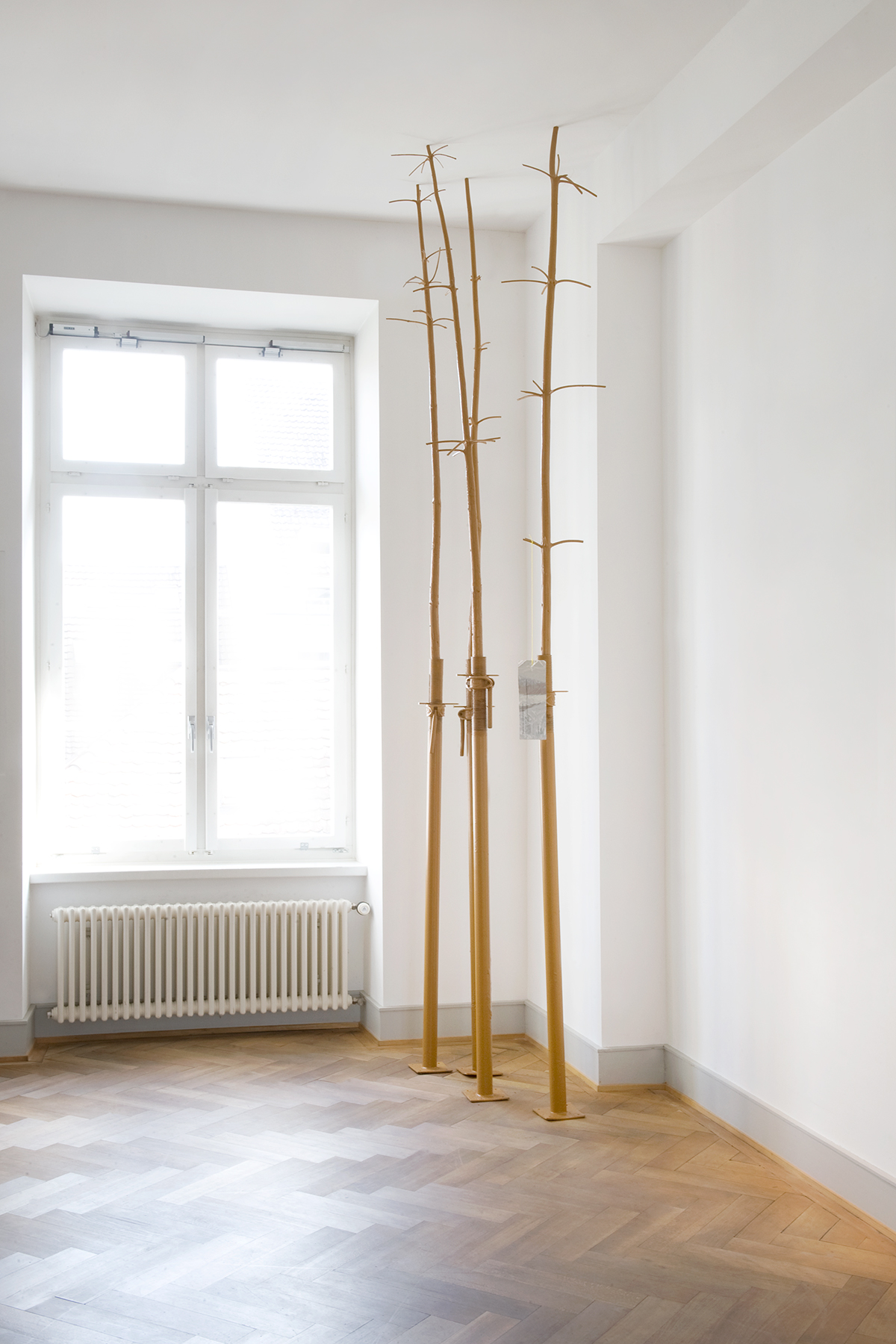
Nicht die Bohne III
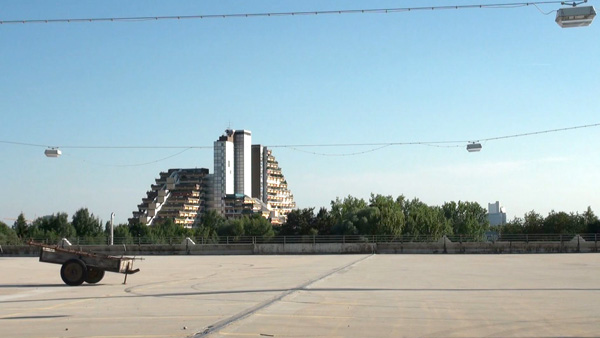
Junge Fichten, einachsiger Holzanhänger
2010 München
Das ideale Stadtbild mit den hübschen, aneinander gereihten Häusern und den gepflasterten Strassen scheint weit weg. Ebenso weit weg scheint die Stadtlandschaft mit Wohnhäusern aus gelbem Sichtbackstein, Fussballfeldern und Kleingärten. Stillstand oder vorübergehende Ruhe ?
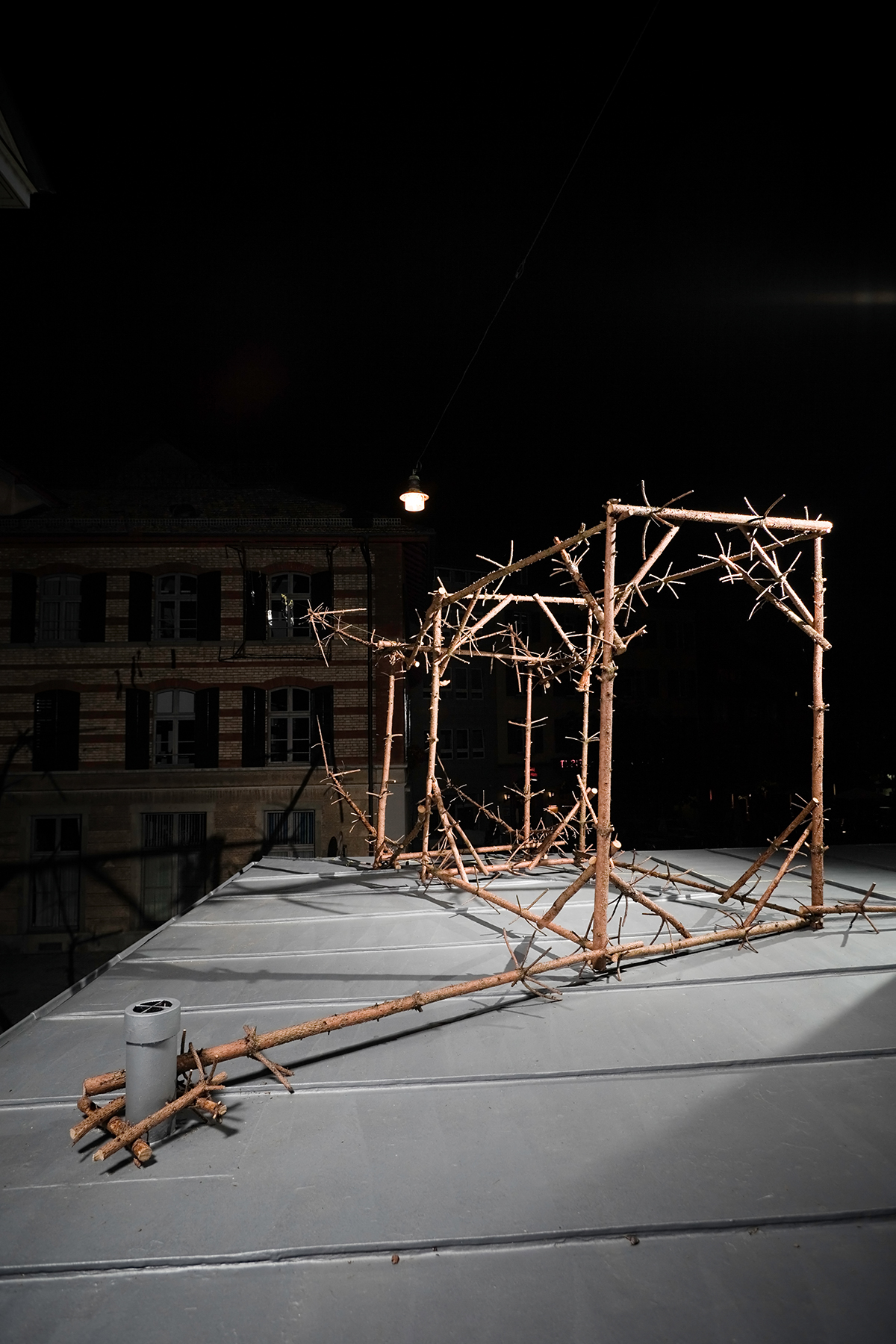
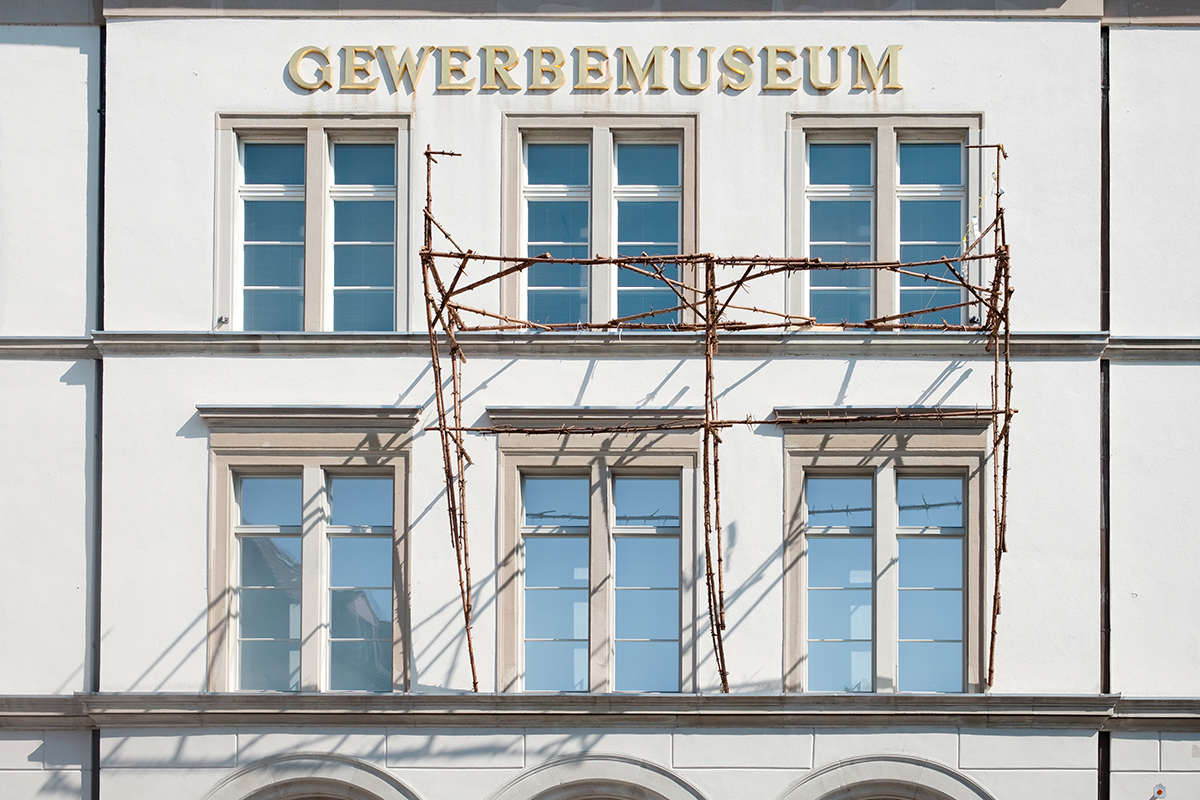
Die Arbeit ‚Nicht die Bohne‘ befasst sich mit der Fragmentierung des Landschaftsraums in Stadtregionen und deren Auswirkungen aufs Stadtideal. Die einst begrenzten Städte werden immer mehr zu Stadtlandschaften. Die Vorstellung des idealen Stadtbilds verblasst am Rand. Ein Fussballfeld, ein Areal mit Kleingärten, dann ein Wohnhaus aus gelbem Sichtbackstein. In der Mitte dann die Stadt selbst. Die Stadt in der alle Strassen gepflastert sind, kaum Autos fahren, die Häuser schmal, hübsch und aneinander gereiht sind. Am verblassten Rand ist unvorstellbar, was die Stadt sein soll. ‚Nicht die Bohne‘ zeigt Einzelstücke aus der Vorstadt in der historischen Mitte der europäischen Stadt. Dabei stellt sich die Frage, was mit dem idealen Stadtbild passieren wird, wenn das Wachstum des verblassenden Rands das Zentrum erreichen kann. ‚Nicht die Bohne‘ evoziert weder sentimentales Nachdenken über die Vergangenheit, noch freudiges Erwarten eines Metroplitanraumes. Sie wirft einen kühlen, hinnehmenden Blick auf ein fragmentiertes Stadtideal der Zukunft.
The work ‚Nicht die Bohne‘ addresses the fragmentation of landscape in metropolitan areas and its effect on the city ideal. The cities, once clearly bordered, are turning more and more into city landscapes. The conception of the city ideal is fading towards its borders. A football pitch, allotment gardens, a residential building with a yellow brick facade. In the centre the city per se. Where all streets are paved and hardly any cars are driving. Where the buildings are narrow, pretty and built side by side, row after row. On the borders, however, it is inconceivable what the city should be.
‚Nicht die Bohne‘ shows single pieces from the suburbs in the historical centre of the European city. This raises the question of what is going to happen to the picture of the city ideal when the growth of the fading borders will be reaching the centre. ‚Nicht die Bohne‘ is neither evoking sentimental thoughts nor joyful expectations of a metropolitan area. It is just taking a acquiescing look at the fragmented city ideal of the future.
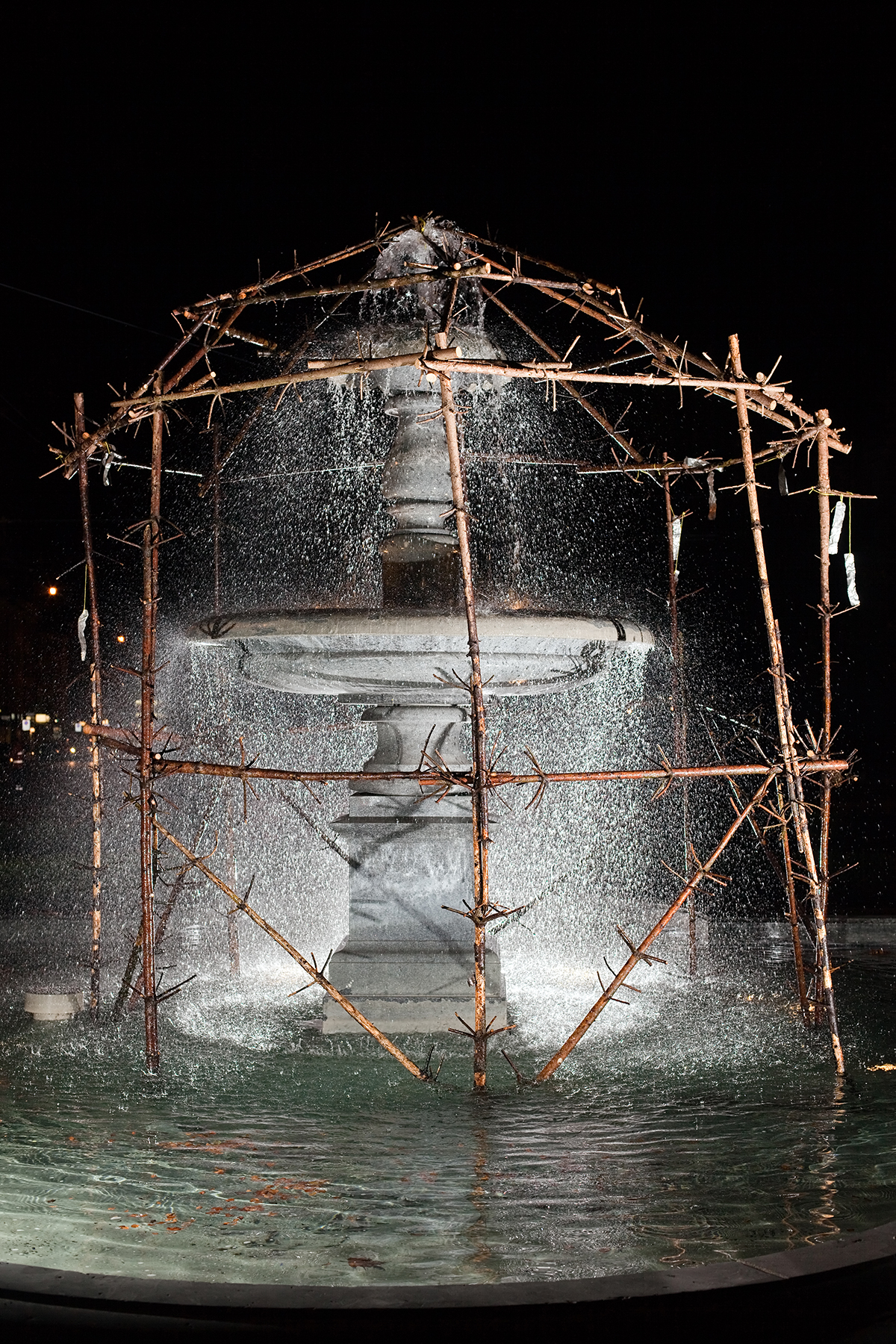
Nicht die Bohne II
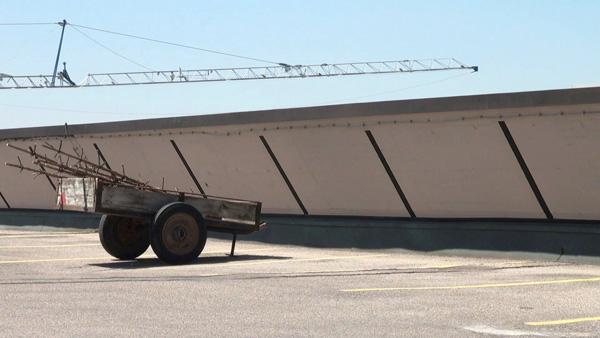
Junge Fichten, Baustützen
2009 Winterthur
Photo Mirjam Graf
Die Arbeit ‚Nicht die Bohne‘ befasst sich mit der Fragmentierung des Landschaftsraums in Stadtregionen und deren Auswirkungen aufs Stadtideal. Die einst begrenzten Städte werden immer mehr zu Stadtlandschaften. Die Vorstellung des idealen Stadtbilds verblasst am Rand. Ein Fussballfeld, ein Areal mit Kleingärten, dann ein Wohnhaus aus gelbem Sichtbackstein. In der Mitte dann die Stadt selbst. Die Stadt in der alle Strassen gepflastert sind, kaum Autos fahren, die Häuser schmal, hübsch und aneinander gereiht sind. Am verblassten Rand ist unvorstellbar, was die Stadt sein soll.
‚Nicht die Bohne‘ zeigt Einzelstücke aus der Vorstadt in der historischen Mitte der europäischen Stadt. Dabei stellt sich die Frage, was mit dem idealen Stadtbild passieren wird, wenn das Wachstum des verblassenden Rands das Zentrum erreichen kann. ‚Nicht die Bohne‘ evoziert weder sentimentales Nachdenken über die Vergangenheit, noch freudiges Erwarten eines Metroplitanraumes. Sie wirft einen kühlen, hinnehmenden Blick auf ein fragmentiertes Stadtideal der Zukunft.
The work ‚Nicht die Bohne‘ addresses the fragmentation of landscape in metropolitan areas and its effect on the city ideal. The cities, once clearly bordered, are turning more and more into city landscapes. The conception of the city ideal is fading towards its borders. A football pitch, allotment gardens, a residential building with a yellow brick facade. In the centre the city per se. Where all streets are paved and hardly any cars are driving. Where the buildings are narrow, pretty and built side by side, row after row. On the borders, however, it is inconceivable what the city should be.
‚Nicht die Bohne‘ shows single pieces from the suburbs in the historical centre of the European city. This raises the question of what is going to happen to the picture of the city ideal when the growth of the fading borders will be reaching the centre. ‚Nicht die Bohne‘ is neither evoking sentimental thoughts nor joyful expectations of a metropolitan area. It is just taking a acquiescing look at the fragmented city ideal of the future.
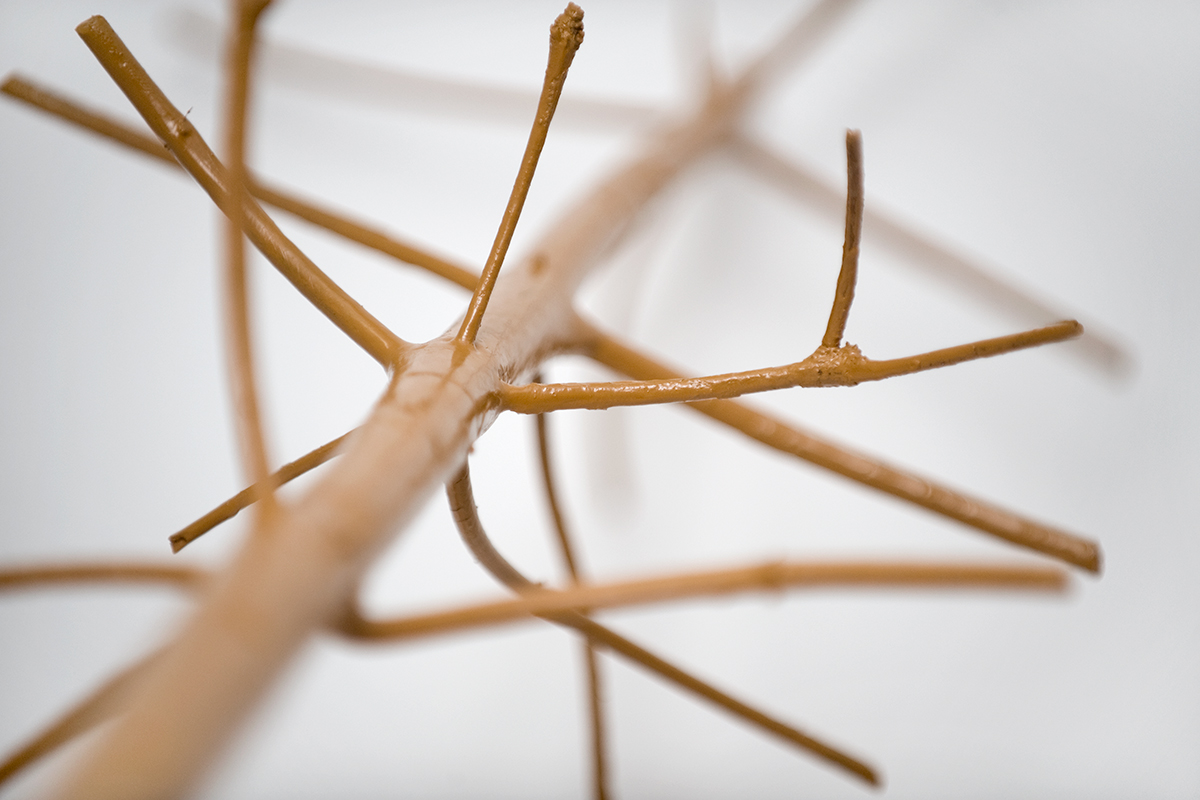
Nicht die Bohne I
Junge entrindete Fichten, gelbe Schnur, Alustreifen
2009 Winterthur
Photo Luca Christen
Die Arbeit ‚Nicht die Bohne‘ befasst sich mit der Fragmentierung des Landschaftsraums in Stadtregionen und deren Auswirkungen aufs Stadtideal. Die einst begrenzten Städte werden immer mehr zu Stadtlandschaften. Die Vorstellung des idealen Stadtbilds verblasst am Rand. Ein Fussballfeld, ein Areal mit Kleingärten, dann ein Wohnhaus aus gelbem Sichtbackstein. In der Mitte dann die Stadt selbst. Die Stadt in der alle Strassen gepflastert sind, kaum Autos fahren, die Häuser schmal, hübsch und aneinander gereiht sind. Am verblassten Rand ist unvorstellbar, was die Stadt sein soll.
‚Nicht die Bohne‘ zeigt Einzelstücke aus der Vorstadt in der historischen Mitte der europäischen Stadt. Dabei stellt sich die Frage, was mit dem idealen Stadtbild passieren wird, wenn das Wachstum des verblassenden Rands das Zentrum erreichen kann. ‚Nicht die Bohne‘ evoziert weder sentimentales Nachdenken über die Vergangenheit, noch freudiges Erwarten eines Metroplitanraumes. Sie wirft einen kühlen, hinnehmenden Blick auf ein fragmentiertes Stadtideal der Zukunft.
The work ‚Nicht die Bohne‘ addresses the fragmentation of landscape in metropolitan areas and its effect on the city ideal. The cities, once clearly bordered, are turning more and more into city landscapes. The conception of the city ideal is fading towards its borders. A football pitch, allotment gardens, a residential building with a yellow brick facade. In the centre the city per se. Where all streets are paved and hardly any cars are driving. Where the buildings are narrow, pretty and built side by side, row after row. On the borders, however, it is inconceivable what the city should be.
‚Nicht die Bohne‘ shows single pieces from the suburbs in the historical centre of the European city. This raises the question of what is going to happen to the picture of the city ideal when the growth of the fading borders will be reaching the centre. ‚Nicht die Bohne‘ is neither evoking sentimental thoughts nor joyful expectations of a metropolitan area. It is just taking a acquiescing look at the fragmented city ideal of the future.